

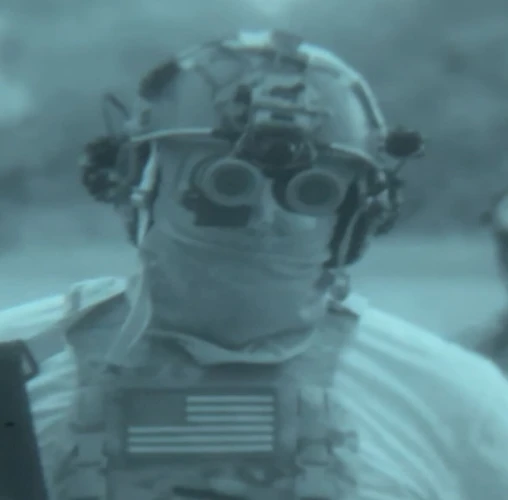
After class, I camped at the range and woke in the back of my car. I opened the hatchback, turned on the thermal, and was shooting at 150 yards with the 10/22 within seconds of waking up. Great start to the day.
The question is whether a $750 thermal can do that every time. Can budget and quality both happen in the same optic?
I ran the Goyojo GRS225RF for the summer, including five nights out, in temperatures from 55 to 95 degrees. It rode on .22 LR and 5.56 rifles for about 250 rounds, and I ran it next to a Pulsar Thermion 2 XL60 LRF. No animals seen or taken.
The short version is that the GRS225RF does a lot for the money. It has a useful rangefinder, an improved app, and it held zero through rough handling. At distance, the image has real limits, which is the usual trade at this price.
Goyojo keeps narrowing the gap between budget thermals and expensive ones. The Score Card and Final Verdict later show where it lands.
Watch the range session:

 AD
ADThe fastest way to find a gun in stock near you.
Guns, ammo, optics, suppressors: one search, 4,200+ stores, live prices.
Pros and Cons
- Built-in rangefinder, which is not common under $1,000.
- Currently under $750, depending on where you buy it.
- Easy-to-navigate mobile app.
- Five zeroing profiles for different setups.
- Ten reticle options in four colors.
- Internal battery ran for more than three hours on a cold night.
- Held zero after about 250 rounds and rough handling.
- Included 30mm rings worked at standard height.
- Eye relief was comfortable on the Christensen Arms Ranger 10/22.
- Image quality drops quickly when zooming, especially past 5x.
- The image turns to mush around 500 yards.
- Refreshes happen often and without a countdown.
- Standard Energizer CR123 batteries worked but drained quickly.
- The included rings are usable, but I would replace them with a QD cantilever mount.
- I could not properly evaluate the ballistic tools or Hot Spot Tracking.
Setting it up
The GRS225RF comes loaded with features. The built-in rangefinder is the headline item. You do not see that very often in thermal optics under $1,000. It lists under $1,000 MSRP and currently sells for under $750. Figure $750 to $950 out the door, depending on where you buy and what else you need.
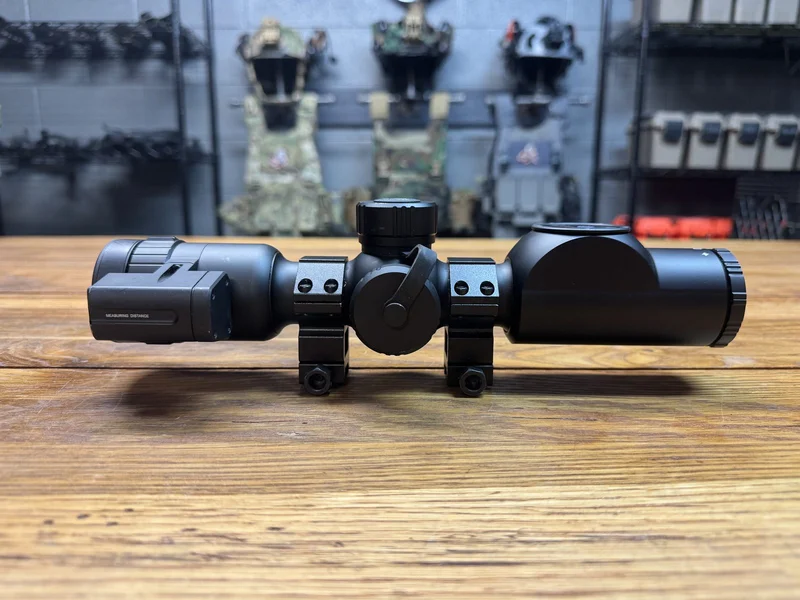
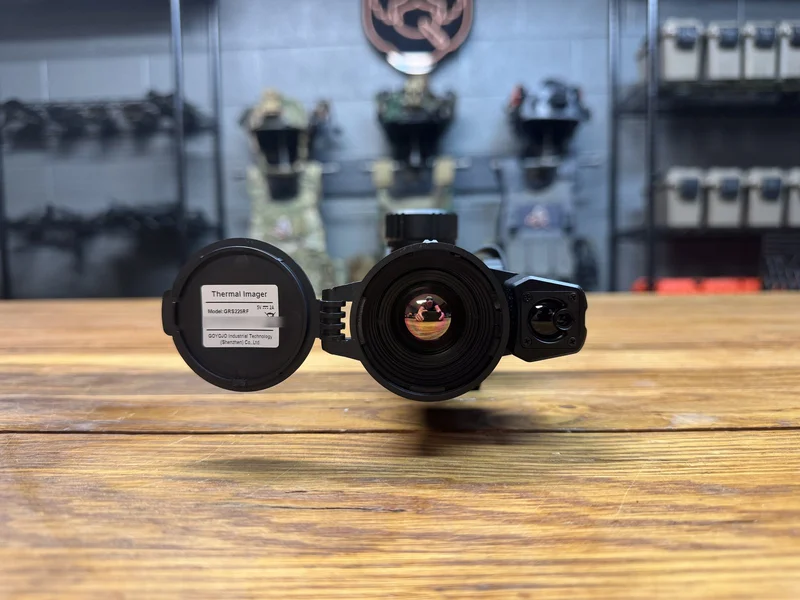
There are settings for screen brightness, thermal brightness, contrast, reticle design, and color palettes. There should be a combination of settings that gives you a workable image during the day or at night.
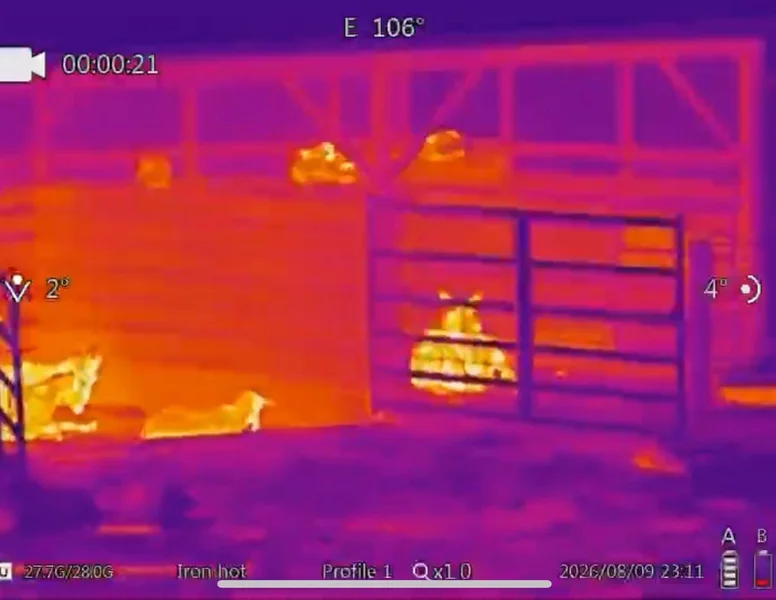
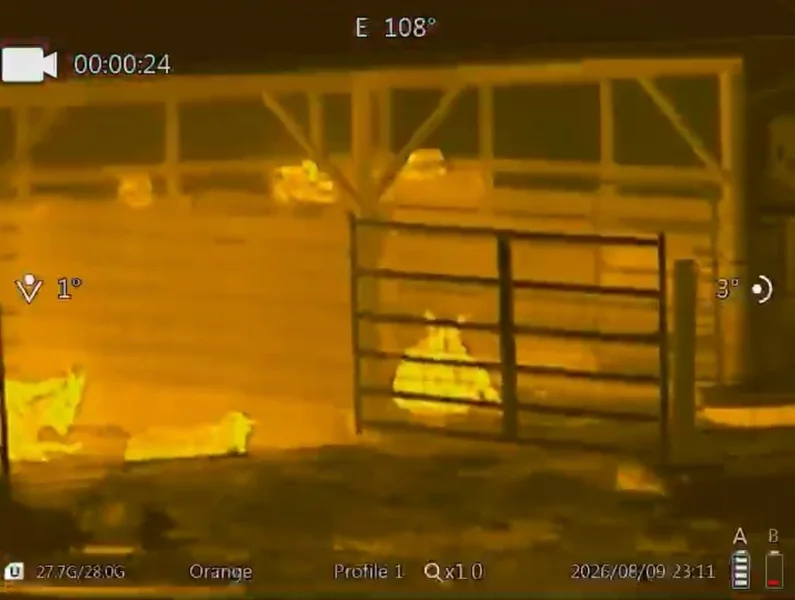
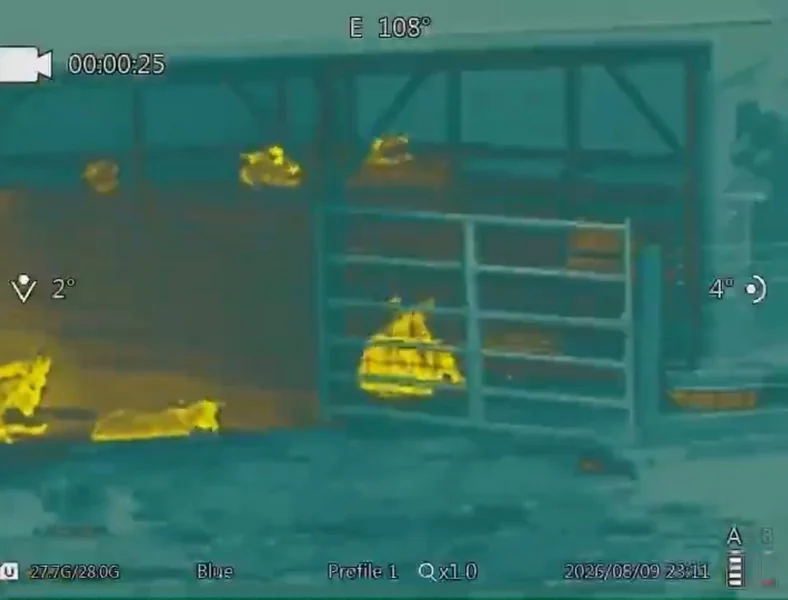
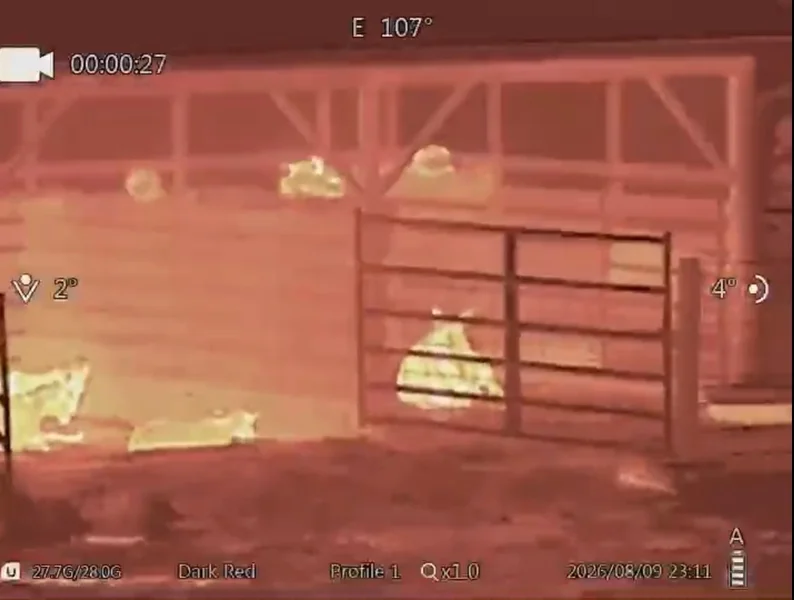
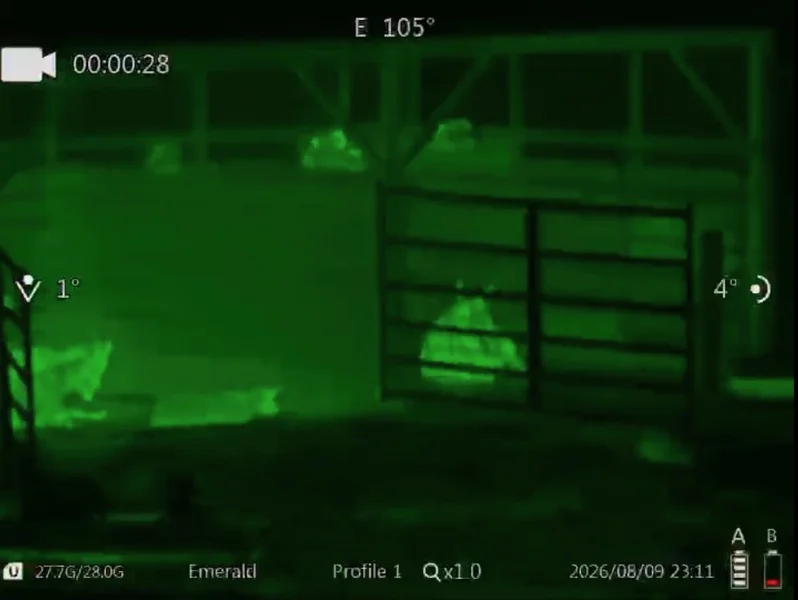
The Quick Menu handles commonly used settings such as brightness and contrast. That helps because navigating the full menu takes more time.
The scope includes ten reticle options in four colors. It also has five zeroing profiles, so you can save different zeros for different rifles or calibers. That makes switching setups faster, but always confirm your zero before relying on it.
There is also a Ballistic Assist section in the menu. I am not a long-range expert, or much of a hunter yet, so I cannot give you a reliable yes or no on those integrated programs. The tools appear to use ballistic coefficient, muzzle velocity, projectile weight, zero distance, sight height, temperature, and altitude.
You can change the impact point style between Chevron, Dot, and X. I do not see that in some scopes I have used that cost four times as much. There is a ton of potential in this scope. It is jam packed with extras.
Hot Spot Tracking is one feature I did not get a chance to test. When I turned it on, the sensor bounced all over the screen trying to find something.
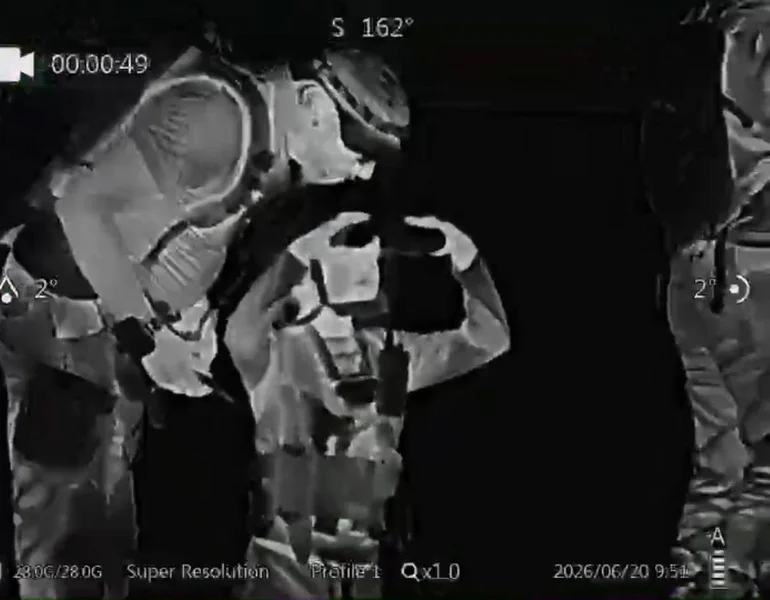
You should be able to pull a thermal out at any time, in any condition, and tell where an object is, how much heat it gives off compared to its surroundings, and whether that heat signature is a threat. The GRS225RF does all of that.
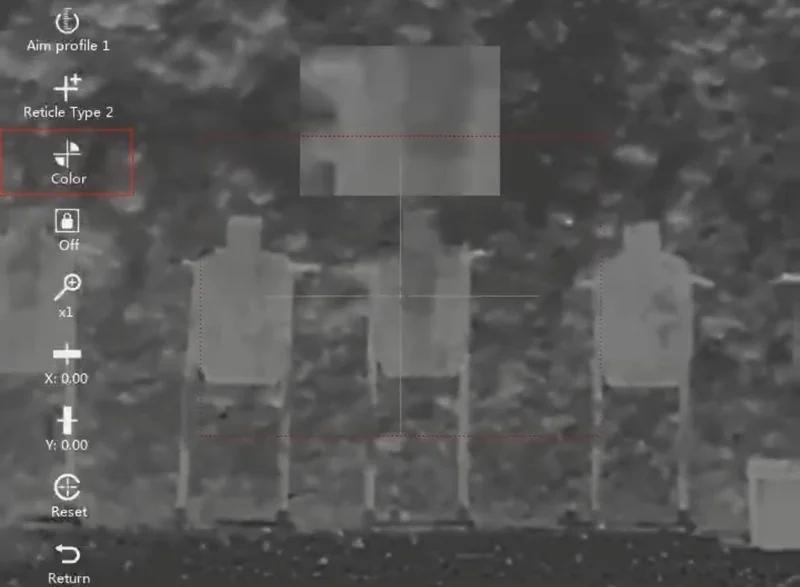
Zeroing took some time. I tried to zero the optic before one of my night vision classes. It was around noon and just starting to warm up, which made the screen difficult to see. I turned up all the brightness settings, but that made it harder to get the “one shot zero” that is possible with thermals.
A perfectly stable shooting platform also helps. I was using a BOG Deathgrip Tripod, and moving the buttons on top of the scope caused the entire rifle to move. That caused most of my trouble.
On the range day in the video, the first two targets sat at about 100 yards and the back two at about 140. The first shot landed well low, and the one-shot zero pulled the next one in close. Through the thermal, I could actually watch the .22 round travel to the target. That was pretty wild.
I would try to see my hit on an Infinity rubber target. Then, the moment I adjusted the settings, the scope moved from its original position. I got it close, but I would say it was still a few clicks off. I finally went with “good enough for me” and stopped there.
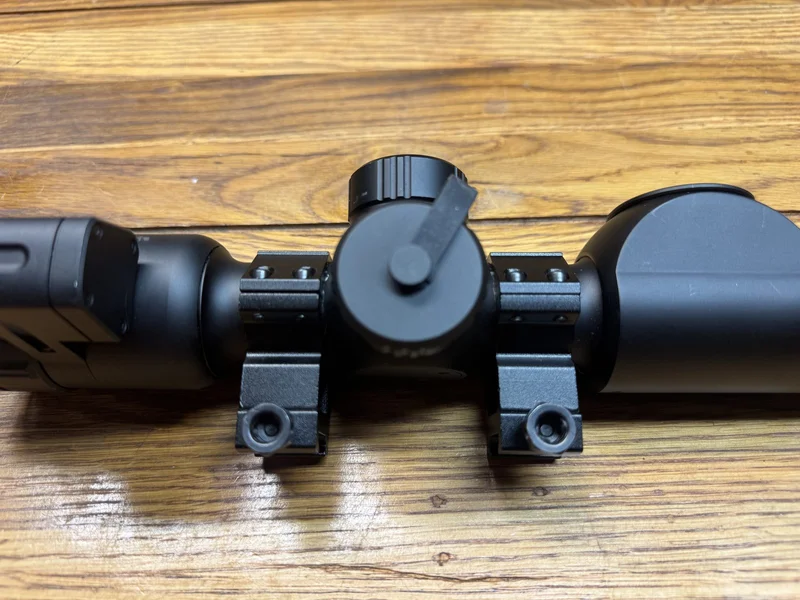
The GRS225RF came with standard 30mm scope rings at a standard height. I used them for the review. Going forward, I would swap them for a QD cantilever mount.
Eye relief was comfortable on the Christensen Arms Ranger 10/22. I had no problem getting behind the optic with the included rings, and I did not need to buy anything else before using it.
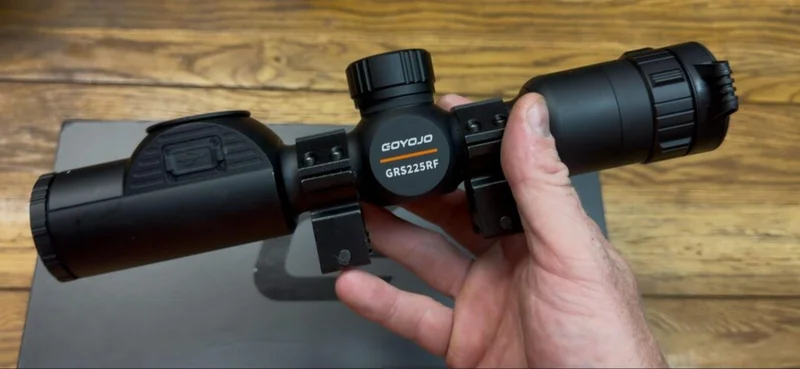
On the rifle, the optic adds a little over one pound.
What is in the box and how it works
- For the range video I ran the GRS225RF on a 10/22 style rifle with a Quark suppressor from Defense Safety Solutions, a 3D-printed plastic .22 can.
- The included rings have a quick tighten and loosen lever, which made them fast to get on the gun.
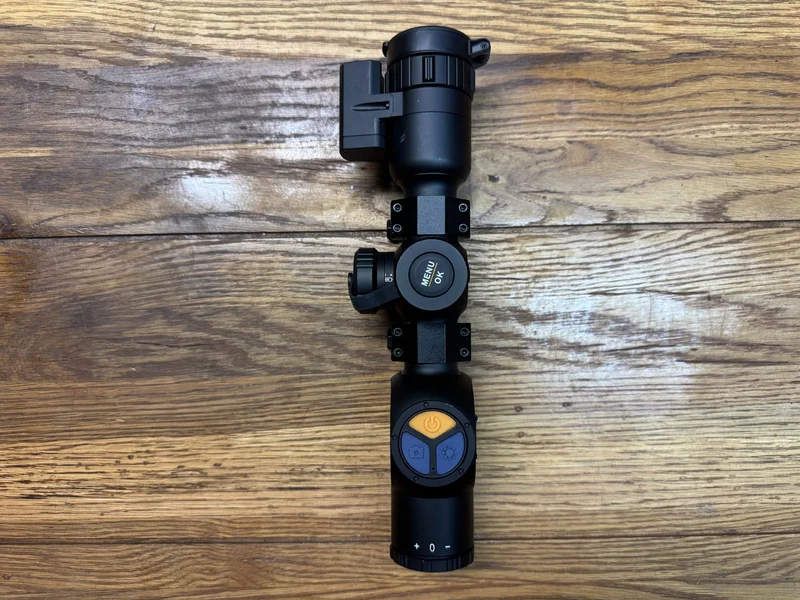
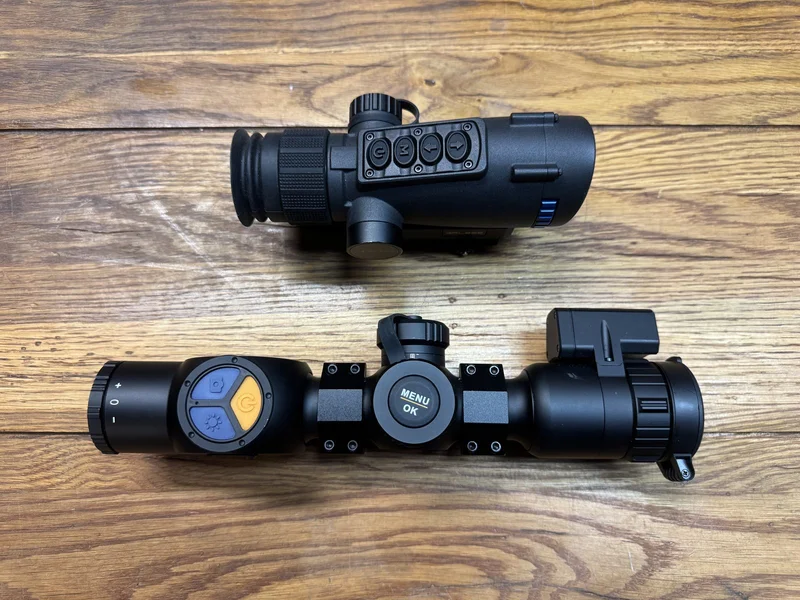
- The bright yellow button is power. Hold it to turn the scope on and off. The menu button also controls digital zoom, from 1x to 8x in small increments. I counted more than 20 zoom stops.
- The blue button takes a picture with one press and starts video recording with two presses. A ticker shows on the left side of the screen while recording. Hold the color palette button to switch palettes. A quick tap opens the rangefinder, and a green box appears on screen. I like the black hot palette.
- The scope has a built-in 18650 battery and a removable CR123. A front cover protects the battery. The box includes a CR123 charger and a USB charger for the internal battery. The charge light is red while charging and goes off when done.
- Claimed specs include a 256 x 192 sensor, 50 Hz, a 25 mm objective, 3.5x base magnification displayed by the scope as 1x, 1x to 8x digital zoom, a 1440 x 1080 display, detection stated at 1,300 m (about 1,400 yards), picture in picture, audio recording, one-shot zero, thermal one-shot zero, and shot-activated recording.
- Compared with the GRL335, the GRS225RF has a 256 x 192 sensor versus 384 x 288, 50 Hz versus 55 Hz, a 25 mm objective versus 35 mm, 3.5x base magnification versus 4x, 1x to 8x digital zoom versus 1x to 4x, and a 1440 x 1080 display versus 1024 x 768.
- The GRL335 has a removable rechargeable battery only. The GRS225RF has an internal battery plus a removable one, records audio, and comes with an easier app. Videos come off the GRS225RF through the app with no problem. I had recording issues with the original.
The app did not get verbally abused
The app was one of the biggest improvements over the previous GRL335. The older app was a frustrating process. Getting a device connected took work, and keeping it connected was another equally frustrating task.
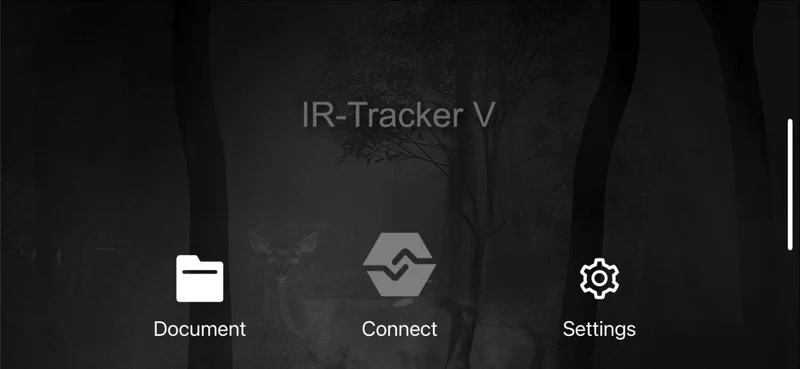
The new IR-Tracker V app is much better. It was easy to navigate, gave clear connection instructions, and stayed connected while I used it.
Compared with the GRL335 app, it is a night and day difference. I think this may be one of the biggest and most noticeable changes between the older models and the GRS225RF. Always screen record if you can, just in case.
Detail at distance
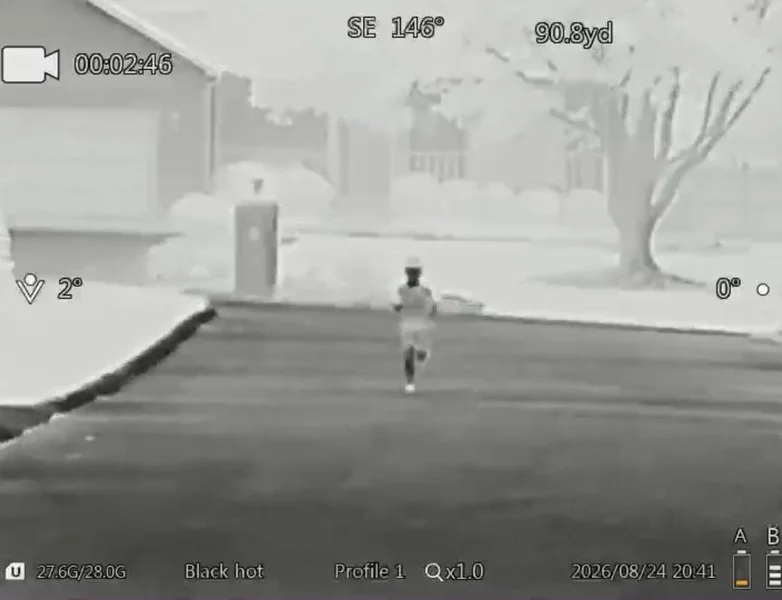
Goyojo states a detection range of 1,400 yards. That number does not mean you have a clear ID on the signature at 1,400 yards. At this price, I expected the detail to fall off hard somewhere in the mid to long range. Surprisingly, I could make out details easily out to 150 yards, and it stayed usable to nearly 200.
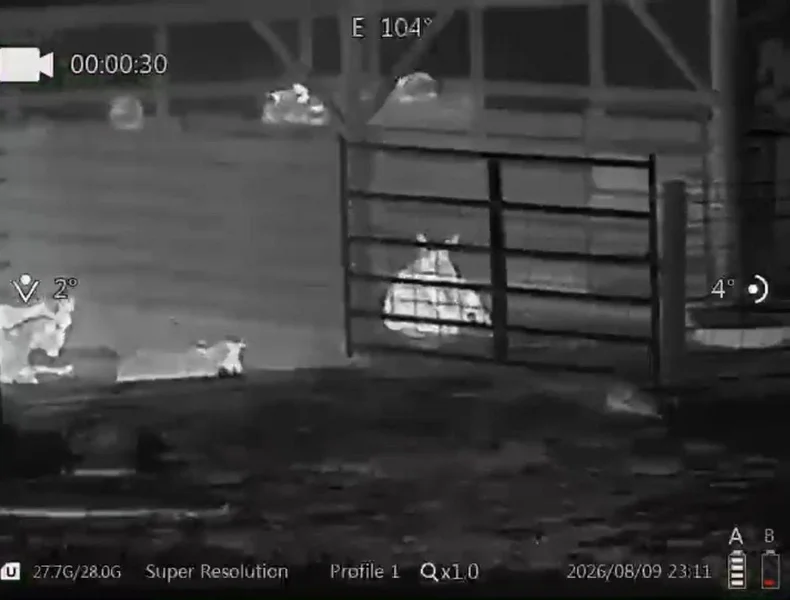
My son helped with a test in our neighborhood. We wanted to see how far out we would still be comfortable calling an ID on a signature. We could easily identify each other out to 175 yards.
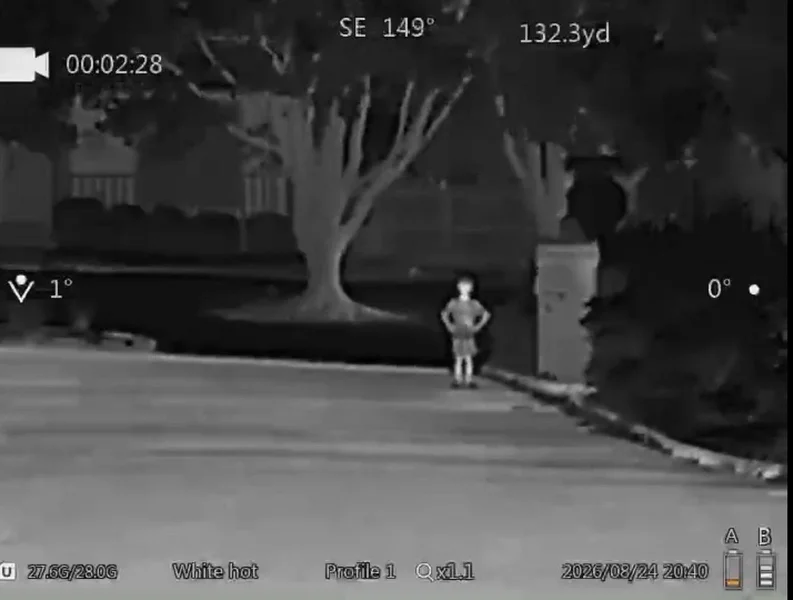
The pixelation gets worse with zoom. I found myself using no more than 4x zoom, or about half of the available zoom potential. Past 5x, the quality dwindles fast.
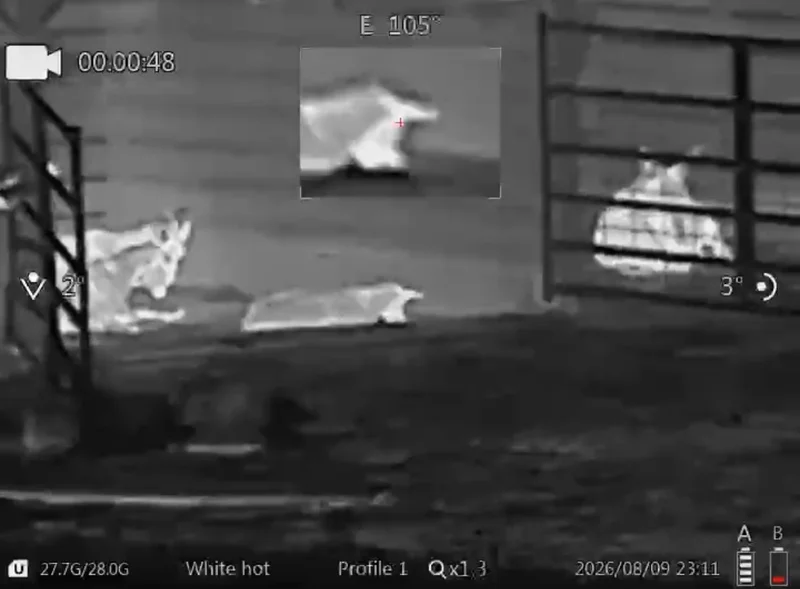
The honest ceiling for this optic is around 500 yards. You can see signatures out to that distance, but the image turns to mush. That matters more than the advertised maximum range on a $750 unit.
The sensor is where Goyojo cut costs to get here. That does not make the unit useless. It is a very capable thermal for the price point, but I would be curious to see how it does on smaller animals past 500 yards.
Running the GRS225RF beside the Pulsar Thermion 2 XL60 LRF made the difference easier to see. I had both on the same nights. The Pulsar was still useful past 1,000 yards, while the Goyojo topped out around 500.
There is a reason the top companies charge what they do.
Living with it
The internal battery worked well during testing. On a cold night, I measured more than three hours of runtime. It stayed charged for the amount of time stated.
A standard Energizer CR123 worked properly, but it drained pretty quickly.
The GRS225RF held zero for the entire review. After about 250 rounds, I noticed no shift.
I was not gentle with it. I tossed it between vehicles, gun cases, and safes. After the first zero session, it was waiting for me to pick up right where I left off.
The multiple shooting profiles also help keep different zeros saved for different caliber setups. That makes re-zeroing quicker, but it does not remove the need to confirm your zero.
The worst part was the refresh behavior. The optic refreshes fairly often, and it seems to happen at the worst time every time. I know it can be turned off, but I found it frustrating that there was no countdown before the refresh.
It may be worth keeping the optic in manual mode, but I never figured out the button for that without going into the menu.
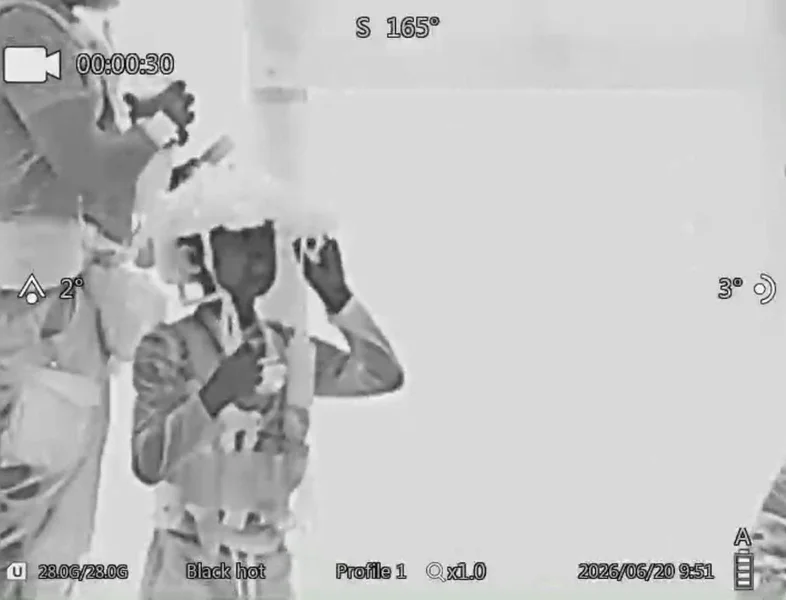
Can budget and quality both happen?
What makes this review hard is having a Pulsar Thermion 2 XL60 LRF on hand at the same time. I know I am in an unusual spot. I have both of these optics without ever reaching for my wallet. So I try to put myself in the buyer’s shoes when I write these.
There is a reason the top companies charge what they do. But companies like Goyojo give me some hope. Features that used to show up only on high-dollar thermals are getting within reach of the average buyer.
The thermal and night vision market is in a boom right now. Gear that once seemed out of reach is available at every price range. People make budget gear work. It happens every day. Skill carries the shooter, but a decent thermal makes life easier.
A “good” price is always subjective. But if buyers at both ends of the spectrum can agree that an optic gives back more than it costs, then the answer is yes. Budget and quality can both happen.
Score Card
Image Quality: 3/5
From 175 yards and in, the thermal works pretty well. I felt comfortable with the image out to about 350 to 400 yards.
Range: 2/5
You can see signatures out to 500 yards, no problem.
Battery: 3/5
The internal battery worked well and stayed charged for the stated runtime. Standard CR123 batteries worked but did not last long.
Ease of Use: 4/5
The onboard menu and mobile app are much easier to use. Props to Goyojo for making this big improvement.
Value: 4/5
At the current $750 price, you get a thermal loaded with features that would typically cost double from other brands with the same specs.
Overall: 3.2/5
How We Tested
I tested the Goyojo GRS225RF over multiple range days and five nights out. I used it on .22 LR and 5.56 setups during all hours of the day and night.
Temperatures ranged from 55 to 95 degrees, with 82% humidity recorded during testing. I fired about 250 rounds through the rifles carrying the optic. I saw no animals and took none.
I also used the GRS225RF alongside a Pulsar Thermion 2 XL60 LRF for a same-night comparison.
Final Verdict
The Goyojo GRS225RF performed better than I expected from a budget thermal at this price. Compared with the earlier sample we tested, the GRS225RF is a noticeable improvement, especially in the onboard menu navigation and the application layout.
It does the job. The rangefinder is useful, the internal battery holds up, the optic held zero, and the app stays connected. We tend to judge budget items harder, but even a budget thermal beats no thermal.
The limits are clear. Zooming breaks the image down quickly, the refresh is annoying, and the image falls apart around 500 yards, while the Pulsar continued beyond 1,000.
Who should buy it? The GRS225RF does more than I expected from a $750 thermal. The app is a big step up from the GRL335, and it held zero through rough handling.
As a stand-alone purchase at the current new price, I would pass. There is a reason the top companies charge what they do. But companies like Goyojo give me hope that those features keep getting closer to the average buyer.