


Thermal scopes turn heat signatures into visible images, even in complete darkness. That makes them a serious edge for hog, coyote, and predator hunting, but the right optic depends on more than detection range. Weight, sensor resolution, battery life, magnification, mounting style, and your budget all matter.
We recommend the Pulsar Thermion 2 LRF XL60 as the best overall thermal scope after our reviewer, Josh Winsett, tested it on the range. It is the best thermal we have shot, by far. Pulsar sent us the XL60 for this review, and our ranking is our own. It is expensive and heavy. For a much lower price, the DNT Hydra has three operating modes.
We’ve put more than 20 leading thermal models through hands-on testing, and we built this 2026 lineup around that real-world performance, not spec-sheet marketing. It covers rifle-mounted scopes, a handheld monocular, a clip-on, a reflex sight, and a surveillance-focused optic. Every pick brings the image quality, controls, battery life, and field capability needed to earn a place here.

 AD
ADThe fastest way to find a gun in stock near you.
Guns, ammo, optics, suppressors: one search, 4,200+ stores, live prices.
13 Best Thermal Scopes
| Image | Product | Sensor resolution | Magnification | Battery | Weight |
|---|---|---|---|---|---|
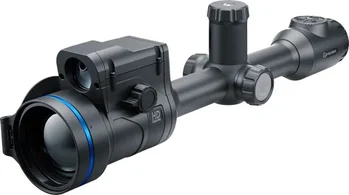 | Best Overall – Pulsar Thermion 2 LRF XL60 | 1024×768 | 2.5-20x | Up to 8 hours | 2.6 lb |
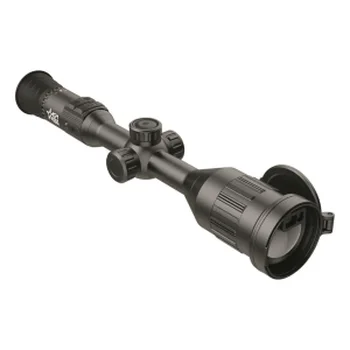 | Best Money Can Buy – AGM Adder V2 LRF 60-1280 | 640×512 | 1x/2x/4x/8x digital | Up to 8 hours | 2.16 lb |
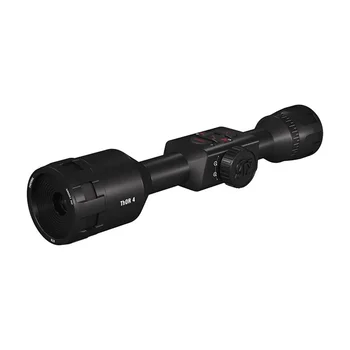 | Best for AR-15 – ATN ThOR 4 384 2-8x | 384×288 | 2-8x | Up to 18 hours | 2.03 lb |
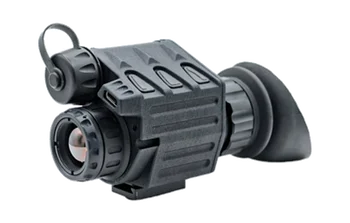 | Best Monocular – Armasight Sidekick 640 | 640×480 | 1-4x | 1.5 hours | 8.48 oz |
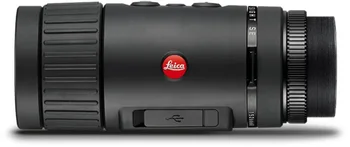 | Best Clip-On – LEICA Calonox | 384×288 | No magnification | 8-11 hours | 24.2 oz |
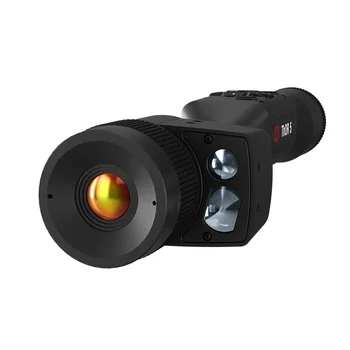 | Best Entry-Level – ATN ThOR 5 LRF | 320×240 | 3-12x on the reviewed configuration | Up to 10 hours | 1.93 lb |
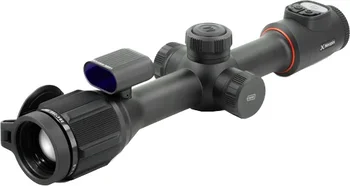 | Best Budget – NOCPIX BOLT L35R | 384×288 | 3.5x base, up to 14x digital | 6.5 hours | 31 oz |
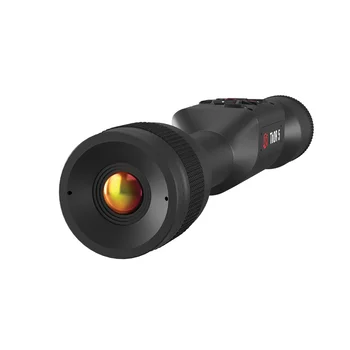 | Budget All-Rounder – ATN Thor 5 Smart HD 3-12x | 320×240 | 3-12x | Up to 10 hours | 1.98 lb |
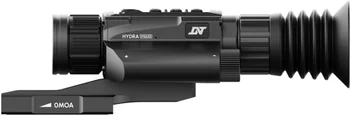 | Best Value – DNT Hydra | 640×512 | 1.5-6x | About 4 hours | 13.7 oz |
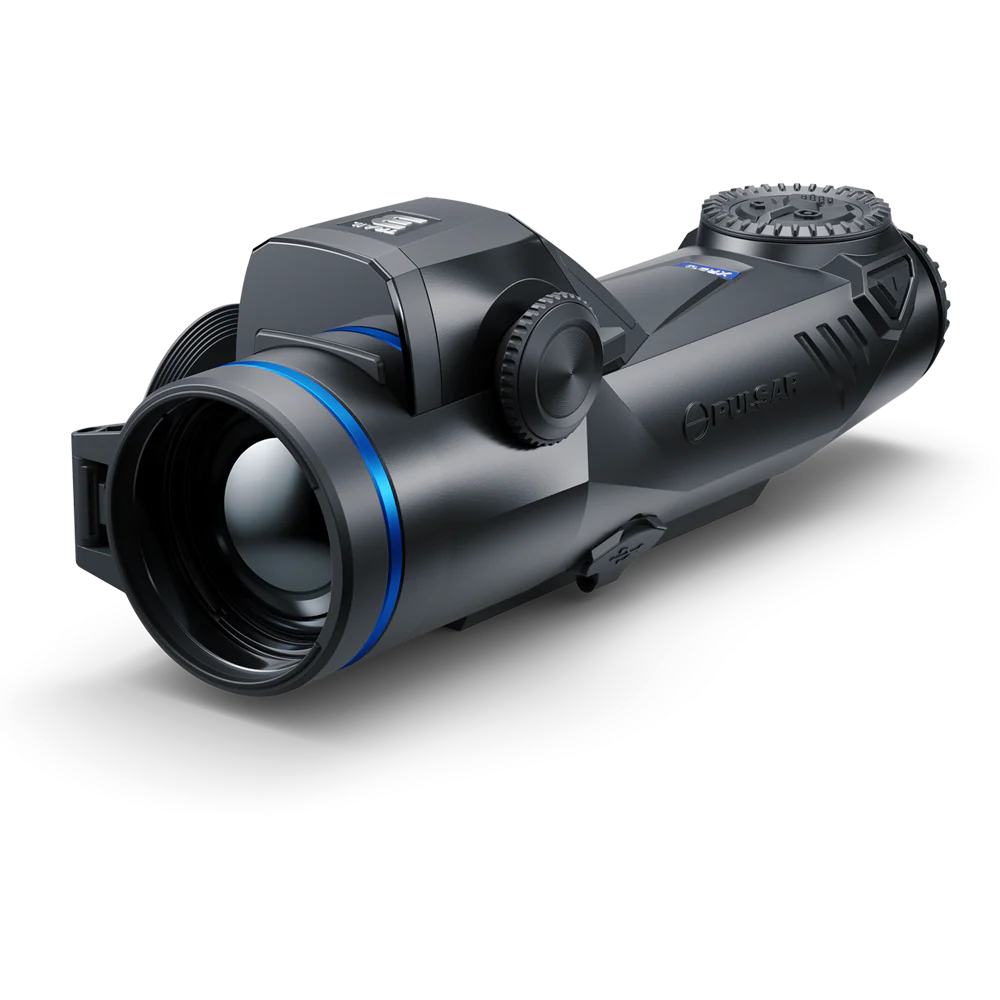 | Mid/Upper-Tier – Pulsar Trail 3 LRF XR50 | 640×480 | 3-24x | Up to 10 hours | 1.54 lb |
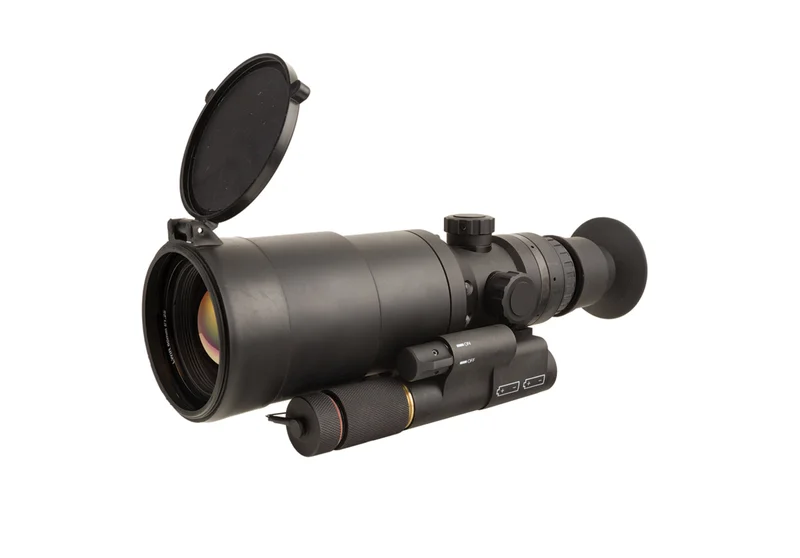 | Best High-End – Trijicon IR-HUNTER MK3 60mm | 640×480 | 4.5x optical, 8x digital | About 2 hours | 37.8 oz |
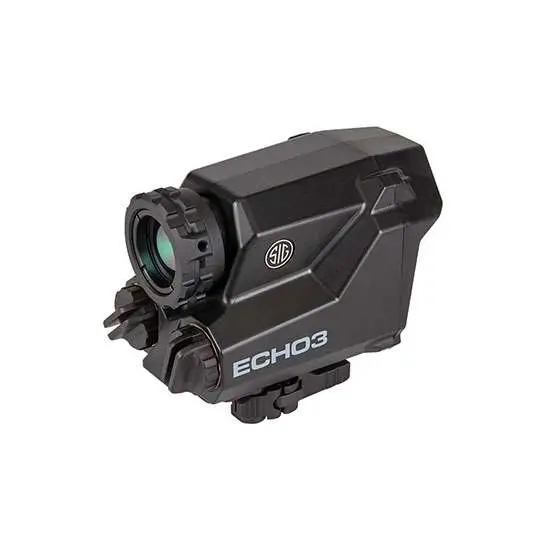 | Best Reflex Sight – Sig Sauer Echo3 | 320×240 | 1-6x | About 6 hours | 14.3 oz |
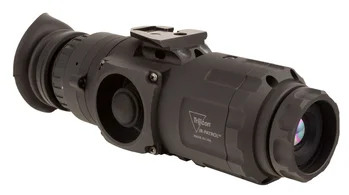 | Best for Surveillance – Trijicon IR-Patrol M300W | 640×480 | 1x | About 2 hours | 16 oz |
Live pricing and retailer availability are shown in the price-comparison widget on each pick below. We’ve also pulled current price ranges and in-stock counts from our own catalog into each product section, current as of this update.
Comparison Chart
This chart is built for a quick first pass. One warning before you read it: detection range is not the same as identification range. A scope may pick up a warm blob at a long distance without showing you enough detail to know what it actually is.
| Best for | Model | Resolution | Magnification | Battery life | Weight | Range or limitation |
|---|---|---|---|---|---|---|
| Rifle-mounted | Pulsar Thermion 2 LRF XL60 | 1024×768 | 2.5-20x | Up to 8 hr | 2.6 lb | 2,800 m (about 3,060-yard) detection and 800 m rangefinder, per Pulsar |
| Rifle-mounted | AGM Adder V2 LRF 60-1280 | 640×512 | 1x/2x/4x/8x digital | Up to 8 hr | 2.16 lb | Detection range up to 3,300 m; built-in LRF |
| AR-15/rifle-mounted | ATN ThOR 4 384 2-8x | 384×288 | 2-8x | 18+ hr | 2.03 lb | Detection range up to about 1,000 yd |
| Handheld/helmet-mounted | Armasight Sidekick 640 | 640×480 | 1-4x | 1.5 hr | 8.48 oz | Wide 24.16° field of view; short runtime |
| Clip-on/handheld | LEICA Calonox | 384×288 | No magnification | 8-11 hr | 24.2 oz | Requires a compatible daytime riflescope and adapter |
| Rifle-mounted | ATN ThOR 5 LRF | 320×240 | 3-12x configuration | Up to 10 hr | 1.93 lb | One-shot zeroing and integrated LRF |
| Rifle-mounted | NOCPIX BOLT L35R | 384×288 | 3.5x base, 14x digital | 6.5 hr | 31 oz | Integrated ballistic calculator and LRF |
| Rifle-mounted | ATN Thor 5 Smart HD 3-12x | 320×240 | 3-12x | Up to 10 hr | 1.98 lb | More affordable, but lower resolution |
| Scope/clip-on/monocular | DNT Hydra | 640×512 | 1.5-6x | About 4 hr | 13.7 oz | Three operating modes; battery swaps may be needed |
| Rifle-mounted | Pulsar Trail 3 LRF XR50 | 640×480 | 3-24x | Up to 10 hr | 1.54 lb | Current successor to the Trail 2 slot |
| Rifle-mounted | Trijicon IR-HUNTER MK3 60mm | 640×480 | 4.5x optical, 8x digital | About 2 hr | 37.8 oz | Excellent high-end capability; short battery life |
| Reflex sight | Sig Sauer Echo3 | 320×240 | 1-6x | About 6 hr | 14.3 oz | Compact AR and pistol-caliber platform |
| Surveillance/handheld | Trijicon IR-Patrol M300W | 640×480 | 1x | About 2 hr | 16 oz | Built for observation and surveillance, not general-purpose hunting |
Best Overall: Pulsar Thermion 2 LRF XL60
Pulsar Thermion 2 Lrf Xl60
1056 listings availableThe Pulsar Thermion 2 LRF XL60 is the best thermal we have shot by far. The rangefinder gave us readings within 1 to 3 yards on known targets. Josh said, “This is by far the nicest thermal I’ve ever played with.” He also said, “This is the way thermal is supposed to be built.” It was Josh’s first Pulsar, and he is “hooked.” It is expensive and heavy, and it is still our top pick.
Our own price-comparison catalog currently lists it at $6,999.97, in stock at 31 of the retailers we track.
Watch our full range review:
Our hands-on Youtube review of the Pulsar thermal.
Specifications
| Feature | Pulsar Thermion 2 LRF XL60 |
|---|---|
| Sensor resolution | 1024×768, 12 µm, 50 Hz |
| Display | 2560×2560 Micro-OLED |
| Objective lens | 60mm |
| Magnification | 2.5-20x |
| Detection range | Up to 2,800 m (about 3,060 yards), per Pulsar |
| Laser rangefinder | Up to 800 m (875 yards), ±1 m, per Pulsar; within 1 to 3 yards out to about 250 yards in our testing |
| Zero profiles | 10 profiles, up to 10 zero distances each |
| Built-in memory | 64 GB (video, audio, and photos) |
| Battery life | Up to 8 hours at 72°F (4,900 mAh built-in pack plus removable APS3 packs; two APS3 packs in the box) |
| Operating temperature | -13°F to 122°F |
| Weight | About 2.6 pounds (1.2 kg) with the removable battery |
| Price | $6,999.97, per our own catalog (31 retailers in stock) |
Pros & Cons
- Best thermal image we have seen
- Rangefinder within 1 to 3 yards
- Useful past 1,000 yards
- Built-in 64 GB recording
- Fast Stream Vision 2 transfers
- Two spare batteries and charger included
- Deep image adjustment settings
- 10 zero profiles for multiple rifles
- Expensive
- Heavy at about 2.6 pounds
- No mount included
- Proprietary battery packs
- Zeroing screen hard to read in bright sun
- Menus take time to learn
How It Performed in Our Testing
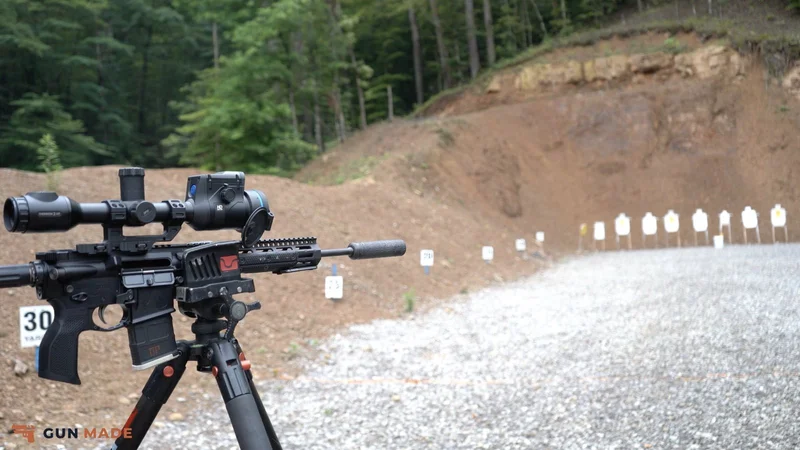
Josh mounted the XL60 on a Midwest Industries QD high-rise mount on our Liberty Bell rifle with a Disavowed Group Bantam 556 suppressor. It did not come with a mount, and we found that odd at this price. We zeroed at about 30 yards on rubber targets. Our zero was close enough, not perfect. We confirmed at 33 yards per the rangefinder. Those first shots were almost dead on. We hit steel at about 100 to 140 yards.
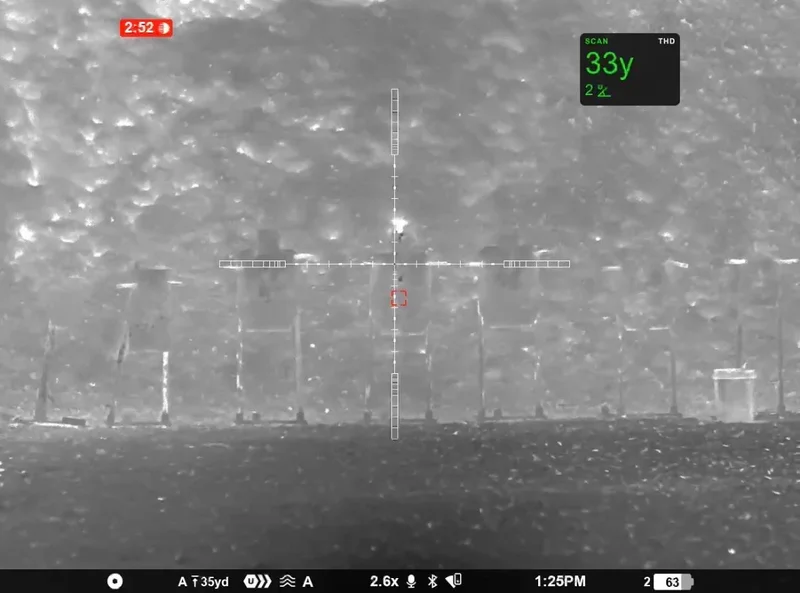
The XL60 has nine color palettes and 10 reticle options in about four or five colors. White hot and black hot were easiest to read at 100 to 140 yards, while the colorful palettes made targets harder to pick out. We liked black hot.
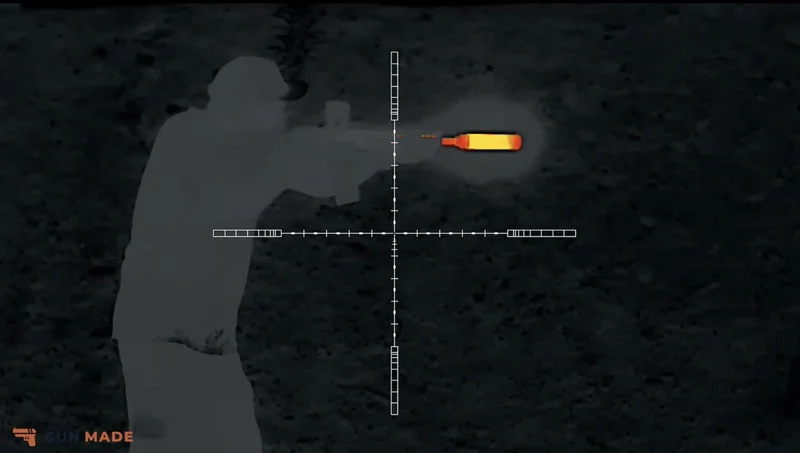
We checked the rangefinder on known targets and got 97 and 98 yards on one, then 133 and 136 yards on another. Out to about 250 yards, the readings stayed within 1 to 3 yards. Other thermals we have used had rangefinders that were extremely off at close distances. Josh called the XL60’s accuracy “a nice breath of fresh air.”
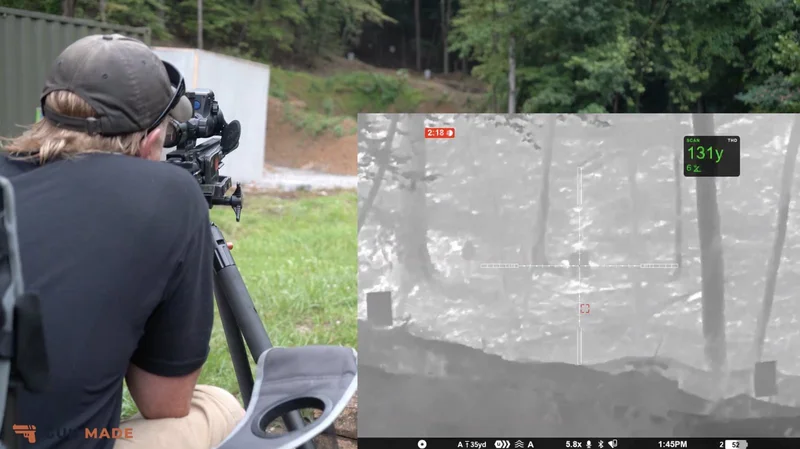
We used the XL60 in Tennessee summer heat at about 95 to 100°F, on a tripod in full sun. It worked fine in hot, humid conditions, though the zeroing screen dims the display and made it harder to see in the brightest part of the day.
We recorded video, audio, and photos to the built-in 64 GB memory and moved files to a phone quickly with the Stream Vision 2 app. We ran it on the internal battery and kept the two removable batteries charged in the range bag. The optic has 10 profiles with up to 10 zero distances each. Each rifle needs its own zero set up and saved to a profile first. When you move the optic, you pick that rifle’s profile and still confirm zero. We did not test moving it between rifles.
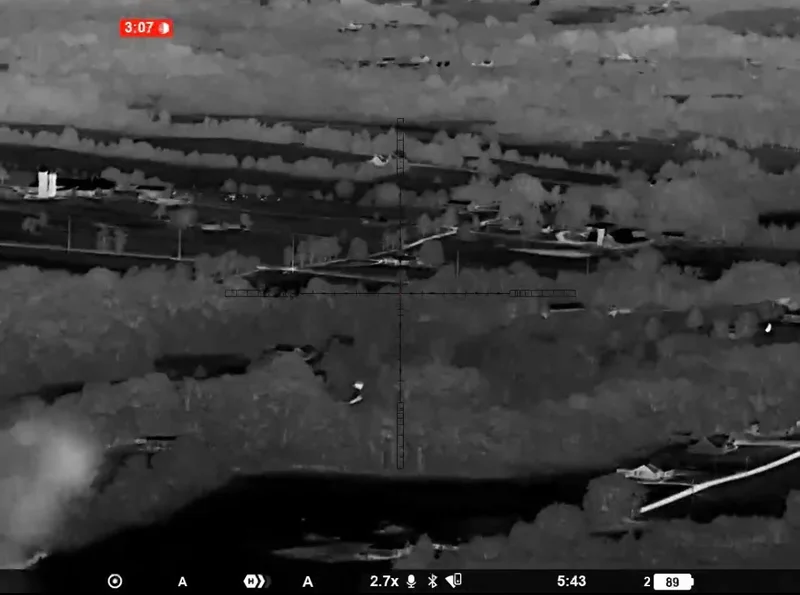
On a night hike with a lit, populated valley in view, we could still pick out heat signatures far out. We also ran the XL60 on the same nights as the budget Goyojo GRS225RF. The Pulsar stayed useful past 1,000 yards, while the Goyojo topped out around 500 yards. After using the XL60, we found the budget optic hard to go back to.
The XL60 weighs about 2.6 pounds. We ran it on a lightweight rifle, but you will feel that weight on a long carry. The proprietary battery packs also take more planning than standard 18650 cells.
If you want the best thermal image and rangefinder performance we have seen and can live with the cost and weight, this is it.
Best Money Can Buy: AGM Adder V2 LRF 60-1280
Agm Adder V2 Lrf 60 1280
809 listings availableIf maximum detection range and a high-resolution display are the priorities, the AGM Adder V2 LRF 60-1280 is the scope to look at first.
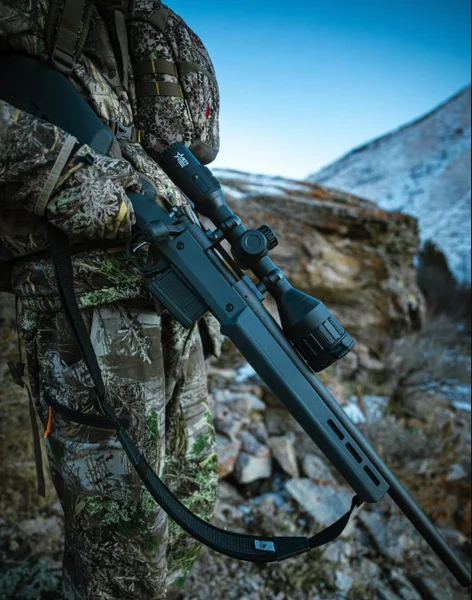
The Adder runs a 640×512 vanadium oxide sensor, a 1280×960 AMOLED display, multiple digital magnification settings, and an integrated laser rangefinder. It’s also rated for recoil from powerful rifles, up to .375 H&H, according to the captured product information.
Specifications
| Feature | AGM Adder V2 LRF 60-1280 |
|---|---|
| Sensor resolution | 640×512 |
| Magnification | 1x, 2x, 4x, and 8x digital |
| Detection range | Up to 3,300 meters reported |
| LRF range | 5-1,500 meters reported |
| Battery life | Up to 8 hours |
| Weight | About 2.16 pounds |
| Price | $6,995.00, per our own catalog (34 retailers in stock) |
Pros & Cons
- Excellent detection range
- Integrated laser rangefinder
- High-resolution AMOLED display
- Wide operating-temperature range
- Durable construction
- Strong recoil rating
- Heavy for long carries
- Expensive
- Bulky or lighter rifles
- Wi-Fi app may lag
The Adder is built for open-country hunters who need to find and assess targets at distance. Its 60mm lens and high-resolution sensor are the main reasons to spend more here.
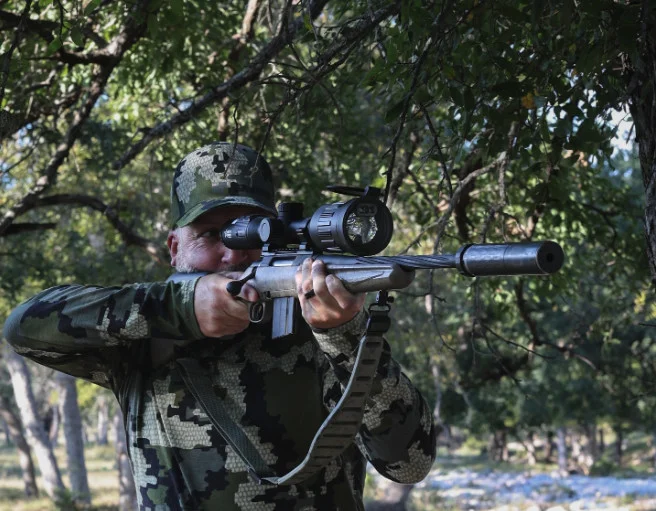
That same design makes it a poor match for a compact, fast-handling rifle. At more than two pounds before a mount, it changes the balance of the gun. And don’t treat the app as essential equipment. The scope needs to work as a standalone optic, and on that front, it delivers.
This is our premium pick for the reader who wants the most capability and is willing to carry it.
Best for AR-15: ATN ThOR 4 384 2-8x
Atn Thor 4
10029 listings availableThe ATN ThOR 4 384 2-8x is a practical match for an AR-15 because its magnification range favors close- to mid-range work instead of extreme-distance shooting.
The 384×288 sensor, 2-8x magnification, onboard video, Wi-Fi streaming, and smart rangefinder give it a useful feature set for hog hunting and general nighttime use. It’s not the lightest thermal out there, but the lower magnification range makes far more sense on a quick-handling AR than a scope built around 20x or 25x digital zoom.
Specifications
| Feature | ATN ThOR 4 384 2-8x |
|---|---|
| Sensor resolution | 384×288 |
| Magnification | 2-8x |
| Detection range | Up to about 1,000 yards reported |
| Battery life | 18+ hours on the internal lithium-ion cell |
| Display | 1280×720 HD |
| Video | 1080p onboard recording |
| Weight | About 2.03 pounds (0.92 kg) |
| Price | $1,365.02-$2,199.00, per our own catalog (49 retailers in stock) |
Pros & Cons
- Useful 2-8x magnification range
- Long internal battery life
- Onboard video recording
- Smart rangefinder
- Wi-Fi streaming
- One-shot zeroing
- Heavy for an AR-15
- More complicated than a basic thermal
- App connectivity can be inconsistent
- 384×288 resolution limits long-range detail
Our original hands-on work with the ThOR 4 platform (testing the 384 4.5-18x configuration) found a clear image, smooth zoom, and an easy one-shot zeroing process. The optic performed well identifying smaller targets at closer distances, although we hit occasional image freezing that required a restart. The 2-8x model reviewed here shares the same 384×288 sensor and core feature set, in a magnification range better suited to an AR-15.
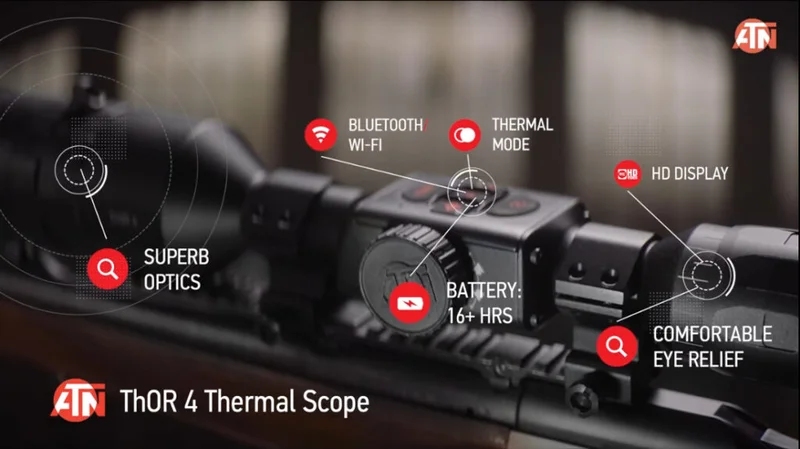
That freezing issue didn’t erase the optic’s usefulness, but it’s worth knowing about. The ThOR 4 is the right call for the AR-15 shooter who values recording, rangefinding, and battery life over minimum weight.
You can also read our ATN ThOR 4 review for a closer look at the platform.
Best Monocular: Armasight Sidekick 640
Armasight Sidekick 640
2127 listings availableThe Armasight Sidekick 640 is the best handheld thermal on this list for readers who want high resolution in a very small package. It works as a handheld viewer and mounts to compatible headgear or helmet systems.
Specifications
| Feature | Armasight Sidekick 640 |
|---|---|
| Sensor resolution | 640×480 |
| Magnification | 1-4x |
| Refresh rate | 60 Hz |
| Battery | CR123A |
| Runtime | About 1.5 hours |
| Weight | About 8.48 ounces |
| Price | $2,533.33-$2,999.00, per our own catalog (73 retailers in stock) |
Pros & Cons
- Very light
- High-resolution 640×480 sensor
- Wide field of view
- Helmet and headset mounting options
- IP67-rated construction
- USB-C extension-power options
- Very short battery life
- Expensive for a handheld
- Not a rifle-mounted scope by itself
- Requires additional mounting equipment for hands-free use
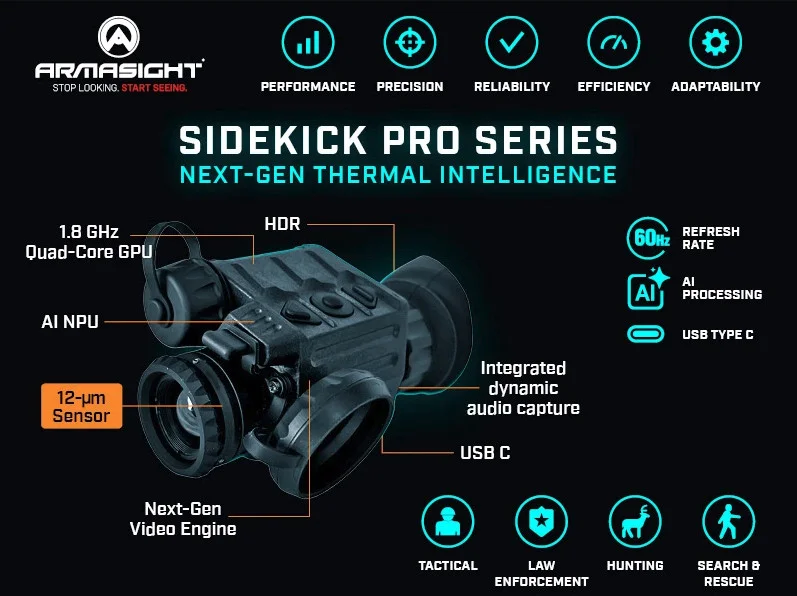
The Sidekick’s strongest feature is its size. At under nine ounces, it’s far easier to carry than a full-size rifle-mounted optic. The wide field of view also helps when you’re scanning rather than aiming at one distant target.
The battery life is the catch. Around 1.5 hours won’t get you through a long night without spare batteries or an external power solution. If you mainly need a lightweight scanner and can plan around that limitation, the Sidekick 640 is an excellent choice.
Best Clip-On: LEICA Calonox
Leica Calonox Clip On
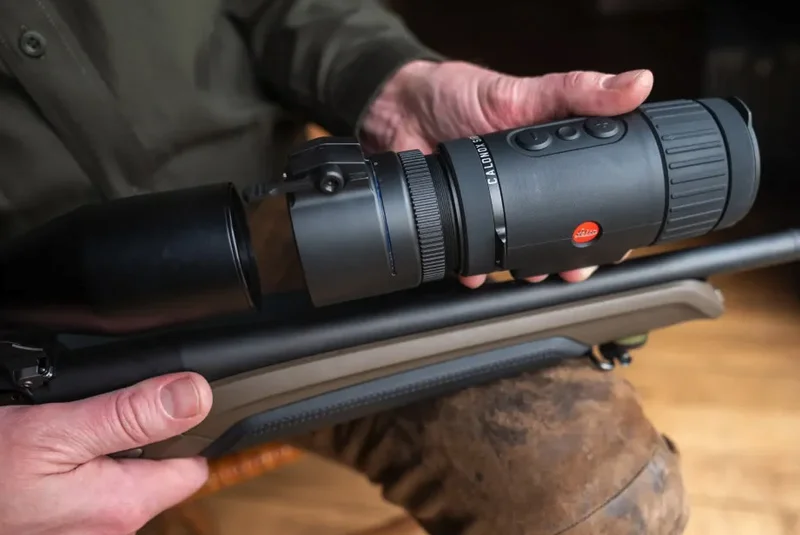
5 listings availableThe LEICA Calonox remains our best clip-on thermal. It attaches in front of a compatible daytime riflescope, so you can run one rifle and one daytime optic for both daylight and thermal work.
The closest match in our own catalog is the Leica SE Calonox Rifle Sight, currently listed at $3,399 through a single retailer. Availability on this specific model is thin right now, so check the widget above before counting on it being in stock.
Specifications
| Feature | LEICA Calonox |
|---|---|
| Sensor | 384×288 VOx |
| Display | 1024×768 OLED |
| Lens | 42mm |
| Magnification | No independent magnification |
| Battery life | Approximately 8-11 hours |
| Mounting | Requires compatible adapter |
| Weight | About 24.2 ounces (685 g) with battery |
| Price | $3,399, per our own catalog (1 retailer listed, currently limited availability) |
Pros & Cons
- Long battery life
- Dual clip-on and handheld use
- Clear thermal image
- Weather-resistant construction
- Easy to attach with the correct adapter
- Preserves the daytime scope’s familiar aiming system
- No independent magnification
- Requires a compatible daytime scope
- Adapter cost adds to the total
- More limited as a standalone monocular
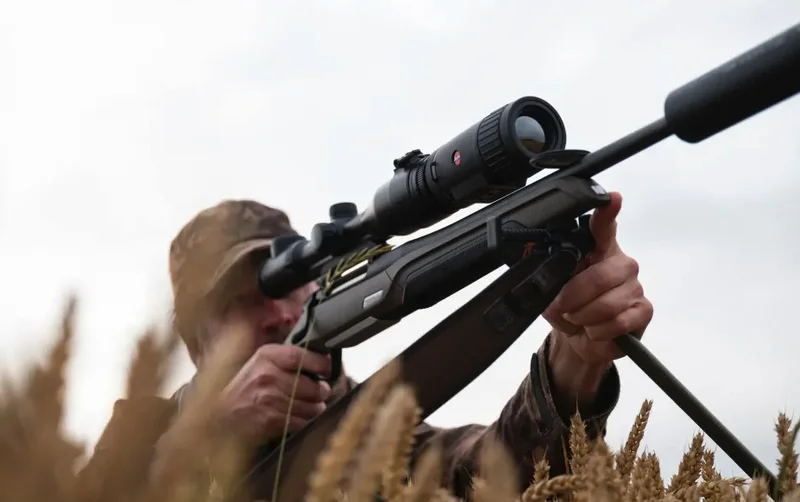
The Calonox is for the hunter who doesn’t want to replace a trusted daytime riflescope. Its lack of independent magnification is far less of a problem when it’s properly mounted in front of a suitable optic.
This is not the best choice for someone starting from zero. You need the right daytime scope, adapter, and mounting setup. If you’re still choosing that daytime optic, start with our guide to the best rifle scopes. But if you already have that foundation, the Calonox is the most adaptable path into thermal shooting.
Best Entry-Level: ATN ThOR 5 LRF
Atn Thor 5 Lrf
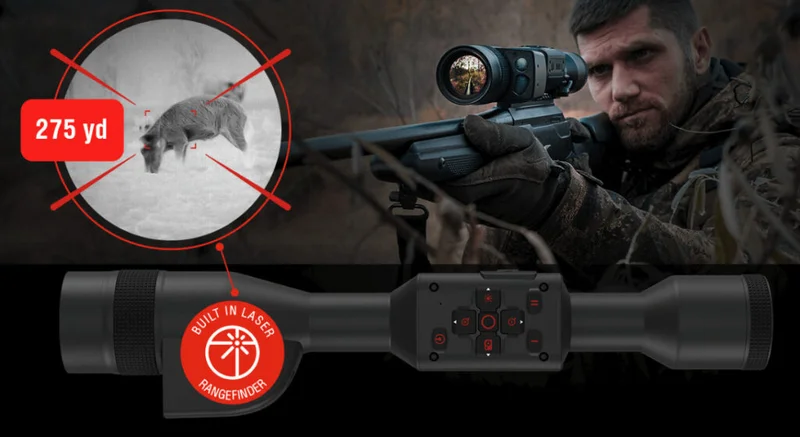
11636 listings availableThe ATN ThOR 5 LRF brings features normally tied to more expensive thermal scopes into a more approachable price tier. The 3-12x configuration we’re reviewing here runs a 320×240 sensor and pairs it with an integrated laser rangefinder, one-shot zeroing, onboard recording, Bluetooth, USB-C, and a ballistic-oriented heads-up display.
Specifications
| Feature | ATN ThOR 5 LRF |
|---|---|
| Sensor resolution | 320×240 (12 micron) |
| Magnification | 3-12x configuration |
| Refresh rate | 60 Hz |
| Battery life | Up to 10 hours |
| Weight | About 1.93 pounds |
| Video | Recoil-activated recording |
| Price | $1,888.75-$1,995.00, per our own catalog (63 retailers in stock) |
Pros & Cons
- Strong resolution for the price tier
- Integrated laser rangefinder
- One-shot zeroing
- Recoil-activated video
- Custom reticle editor
- Long battery life
- Several configurations available
- Heavy
- Higher-resolution variants cost more
- Takes time to learn the menus
- Feature-rich design may be excessive for casual users
The ThOR 5 is a good entry point because it doesn’t force you to choose between basic imaging and useful modern features. Its 320×240 sensor is on par with other budget-tier thermals rather than a step up in resolution, so the appeal here is the feature set (rangefinder, one-shot zero, Bluetooth) at this price, not superior image detail.
The catch: “entry-level” describes the price tier more than the physical design. This is still a substantial optic, and the ballistic display, recording controls, and multiple shooter profiles take setup time.
For a new thermal buyer who wants room to grow, the ThOR 5 LRF is our pick.
Best Budget: NOCPIX BOLT L35R
Nocpix Bolt L35R
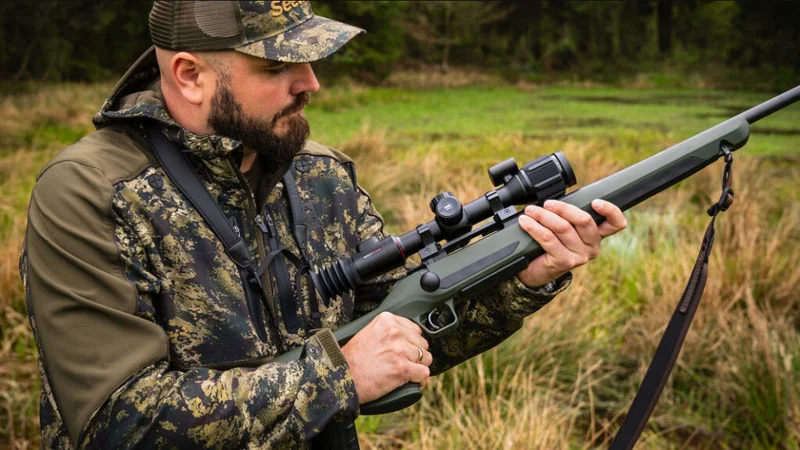
819 listings availableThe NOCPIX BOLT L35R is our best budget thermal scope for readers who want a rifle-mounted optic with a laser rangefinder without stepping into premium pricing.
Our own catalog currently lists it between $1,835.12 and $1,999.00, in stock at 55 of the retailers we track. Its 384×288 sensor, 3.5x base magnification, integrated ballistic calculator, Wi-Fi connectivity, and standard 18650 battery make it a well-rounded option for predator hunters.
Specifications
| Feature | NOCPIX BOLT L35R |
|---|---|
| Sensor resolution | 384×288 |
| Magnification | 3.5x base, up to 14x digital |
| Battery | Standard 18650 |
| Runtime | About 6.5 hours |
| Laser rangefinder | Yes |
| Weight | About 31 ounces (878 g) |
| Price | $1,835.12-$1,999.00, per our own catalog (55 retailers in stock) |
Pros & Cons
- 384×288 sensor
- Built-in laser rangefinder
- Integrated ballistic calculator
- Standard 18650 battery
- Wi-Fi and mobile-app connectivity
- Five-year warranty and reported five-day repair program
- Digital zoom can’t replace optical detail
- Battery life is moderate
- More expensive than basic 256-resolution thermals
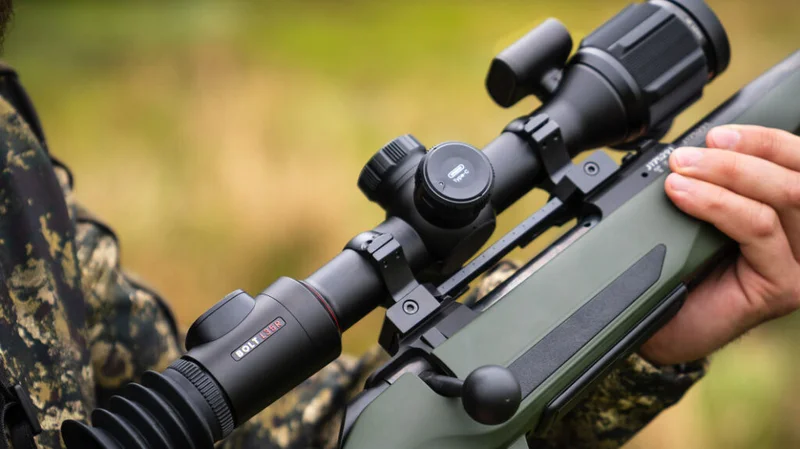
The BOLT L35R hits a useful middle ground. It’s not a stripped-down optic, but it also avoids the price jump that comes with 640-class premium models.
The 3.5x base magnification suits predator hunting where the target may be several hundred yards out. Just keep expectations realistic: digital magnification enlarges the image, but it can’t create detail the sensor never captured.
Budget All-Rounder: ATN Thor 5 Smart HD 3-12x
Atn Thor 5 Smart Hd 3 12X
1462 listings availableThe ATN Thor 5 Smart HD 3-12x is aimed at buyers who want a versatile scope with long battery life and smart features while staying below the premium tier.
Specifications
| Feature | ATN Thor 5 Smart HD 3-12x |
|---|---|
| Sensor resolution | 320×240 |
| Magnification | 3-12x |
| Battery life | Up to 10 hours |
| Display | 1280×960 OLED reported |
| Weight | About 1.98 pounds |
| Video | 1080p onboard recording |
| Price | $1,795.00, per our own catalog (69 retailers in stock) |
Pros & Cons
- Long battery life
- Smart ballistic calculator
- Onboard video
- Wi-Fi streaming
- Broad 3-12x magnification range
- More approachable than high-end 640-class scopes
- Lower resolution than the ThOR 5 LRF
- Heavy for a budget optic
- App connectivity may be inconsistent
- Slower image detail at longer distances
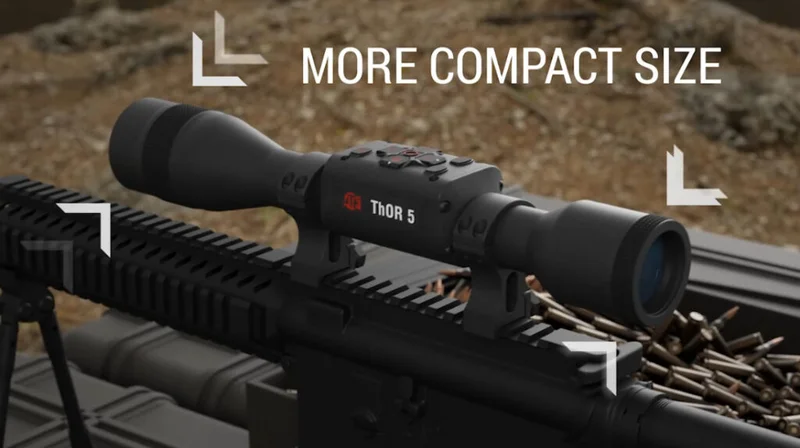
The Thor 5 Smart HD makes sense for the hunter who wants one optic to handle a variety of nighttime tasks. The 3-12x range gives you flexibility, and the battery life is genuinely helpful during long sits.
The 320×240 sensor is the compromise. It works well at closer ranges, but it loses definition sooner than a 384- or 640-class sensor. This is a budget all-rounder, not a long-range identification specialist.
Best Value: DNT Hydra
Dnt Hydra
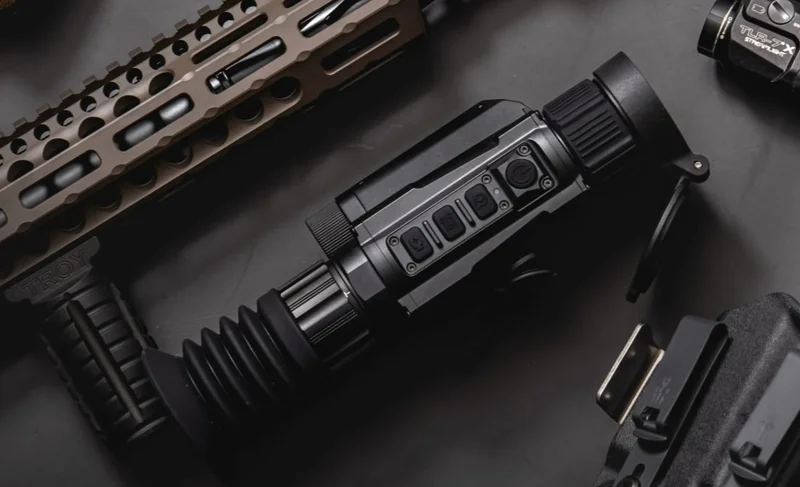
1976 listings availableThe DNT Hydra is the most interesting value pick on this list because it works as a weapon-mounted scope, a clip-on thermal, or a handheld monocular. That flexibility gives it a strong argument over a more specialized optic.
Our own catalog currently lists the 1.5-6x35mm, 640×512 configuration between $1,645.12 and $2,240.00, in stock at 57 of the retailers we track.
Specifications
| Feature | DNT Hydra |
|---|---|
| Sensor resolution | 640×512 |
| Magnification | 1.5-6x |
| Battery | 18650 cells |
| Runtime | About 4 hours |
| Laser rangefinder | No (the HS635R variant adds one) |
| Operating modes | Scope, clip-on, handheld |
| Weight | About 13.7 ounces (389 g); roughly 20.2 oz with mount, battery, and eyecup |
| Price | $1,645.12-$2,240.00, per our own catalog (57 retailers in stock) |
Pros & Cons
- Three operating modes
- High-resolution sensor
- 1024×768 micro-OLED display
- 18650 battery cells
- Compact alternative to owning multiple thermals
- Reported quick transitions between modes
- Shorter battery life
- Requires learning three operating configurations
- Versatility may be unnecessary for a dedicated rifle
- No built-in laser rangefinder on this configuration
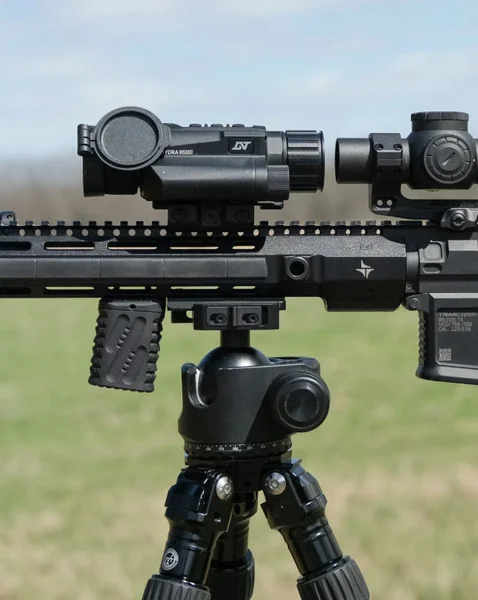
The Hydra shows that the most expensive thermal isn’t always the best value. If you only need a scope, a dedicated model is simpler. But if you want one optic that can scan handheld, mount in front of a daytime scope, and serve as a rifle-mounted sight, the Hydra covers more jobs than anything else here.
Its roughly four-hour runtime is the main limitation. Carry spare cells for a long night.
Mid/Upper-Tier: Pulsar Trail 3 LRF XR50
Pulsar Trail 3 Lrf Xr50
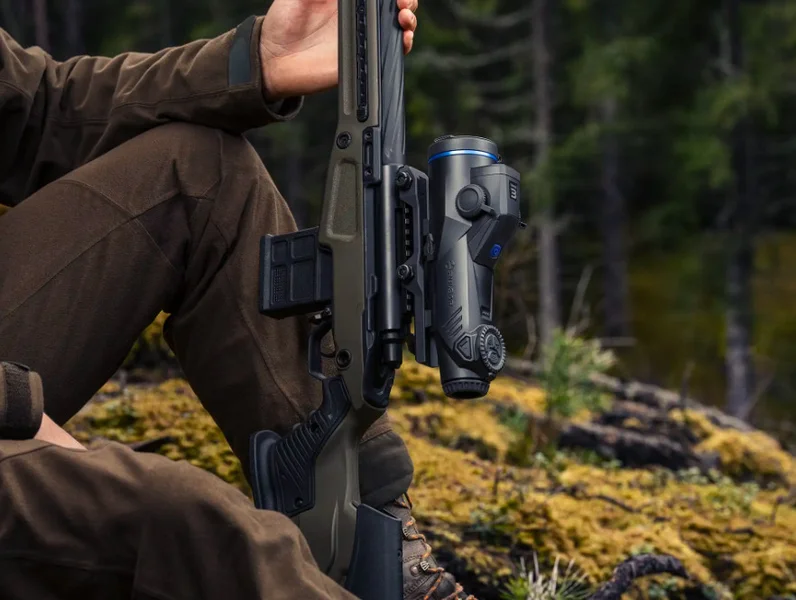
1950 listings availableThe Pulsar Trail 3 LRF XR50 replaces the older Trail 2 LRF XP50 in this roundup. It’s the current-generation choice for readers shopping a serious mid- to upper-tier thermal with a built-in rangefinder.
Our own catalog currently lists it between $3,482.32 and $4,199.97, in stock at 58 of the retailers we track. That is the deepest stock position of any pick on this list.
Specifications
| Feature | Pulsar Trail 3 LRF XR50 |
|---|---|
| Sensor resolution | 640×480 (12 micron, NETD below 18 mK) |
| Magnification | 3-24x |
| Battery life | Up to 10 hours on the removable Pulsar LPS7i pack |
| Weight | About 1.54 pounds (1 lb 8.7 oz) |
| Laser rangefinder | Yes |
| Price | $3,482.32-$4,199.97, per our own catalog (58 retailers in stock) |
Pros & Cons
- Current successor to the Trail 2 slot
- Integrated laser rangefinder
- Designed for serious rifle-mounted use
- Upper-midrange alternative to flagship thermals
- 1920×1080 AMOLED display and a 1,200-meter laser rangefinder
- Expensive
- Heavier than most 640-class scopes in this price tier
- Availability may vary as the previous Trail generation is replaced
- Too much scope for casual nighttime use

The Trail 3 earns its slot because it fills the gap between budget thermals and the most expensive flagship models. It’s a better fit for the hunter who wants a dedicated rifle optic but doesn’t need to spend more than $7,000.
Because this model replaces the Trail 2, verify the exact configuration and current listing before ordering. Don’t assume an older Trail 2 price or spec applies to the Trail 3.
Best High-End: Trijicon IR-HUNTER MK3 60mm
Trijicon Ir Hunter
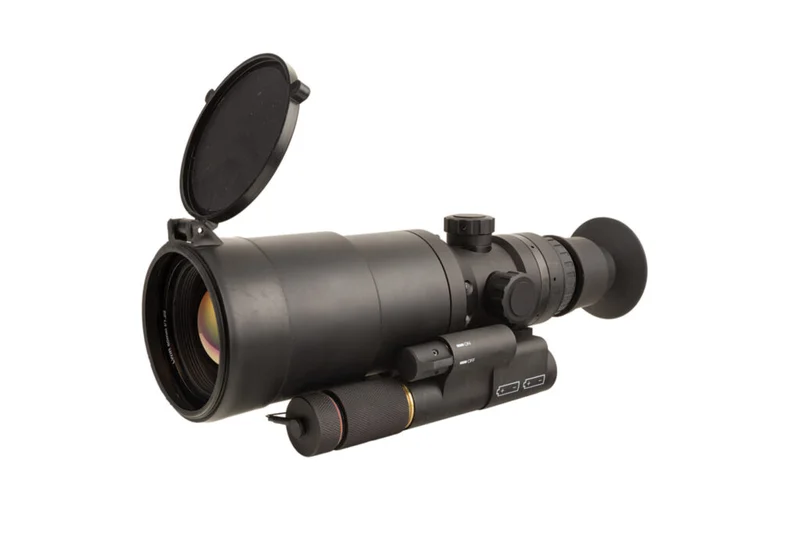
4619 listings availableThe Trijicon IR-HUNTER MK3 60mm is a rugged, high-end thermal for buyers who prioritize durability and straightforward operation over battery life or low weight.
Specifications
| Feature | Trijicon IR-HUNTER MK3 60mm |
|---|---|
| Sensor resolution | 640×480 |
| Magnification | 4.5x optical, 8x digital |
| Refresh rate | 30-60 Hz |
| Battery | Two CR123 batteries |
| Runtime | About 2 hours |
| Weight | About 37.8 ounces |
| Price reference | About $7,878-$8,999 |
Pros & Cons
- Durable construction
- High-resolution sensor
- Selectable reticles
- Stadiametric rangefinder
- Video recording
- Battery extender available
- Submersible design
- Very expensive
- Heavy
- Short battery life
- More limited field of view than lower-magnification optics
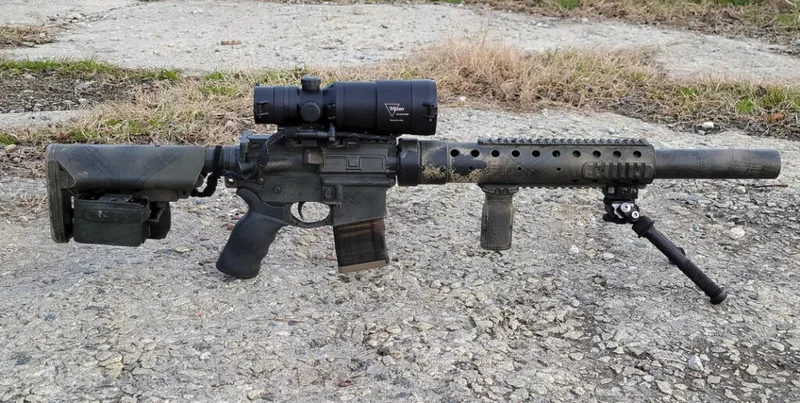
The IR-HUNTER is not subtle. At nearly 38 ounces, it adds real weight to a rifle, and the two-hour battery life means spare batteries or an extender are part of the setup, full stop.
What you get in return is a robust optic with a clear image, useful reticles, and a design made for demanding field conditions. This is a serious tool for a serious hunter, not a casual accessory.
Best Reflex Sight: Sig Sauer Echo3
Sig Sauer Echo3
3014 listings availableThe Sig Sauer Echo3 is a compact thermal reflex sight for close- to mid-range use on AR-15s, pistol-caliber carbines, and similar platforms. It’s also one of the few products in this category that makes sense when you want a small, low-profile optic instead of a traditional thermal scope.
Specifications
| Feature | Sig Sauer Echo3 |
|---|---|
| Sensor resolution | 320×240 |
| Magnification | 1-6x |
| Refresh rate | 30 Hz |
| Battery life | About 6 hours |
| Eye relief | Unlimited |
| Weight | 14.3 ounces |
| Price | $1,618.46-$2,799.99, per our own catalog (43 retailers in stock) |
Pros & Cons
- Compact and lightweight
- Unlimited eye relief
- Motion-activated display
- Multiple reticles and palettes
- BDX connectivity
- Quick-disconnect mount
- Works well on mid-range AR platforms
- Narrow field of view
- Sensor is modest for the price
- Better suited to close and mid-range work
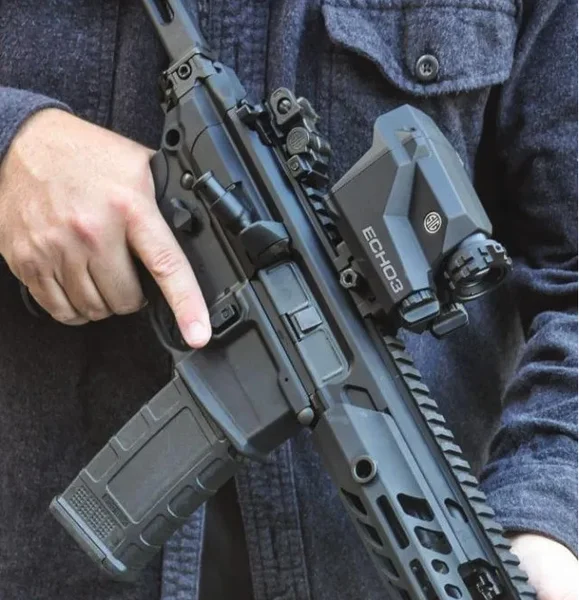
The Echo3 trades long-range reach for speed and size, and that’s the point. The motion-activated display helps preserve battery life, and the reflex format makes it easy to run with both eyes open, much like the red dot sights we recommend for AR-15s.
The 320×240 sensor is enough for the platform, but long-range hunters will want more resolution. For an AR-15 working around the 100-yard mark, the Echo3 remains a distinctive and useful option. It’s also one of the better-stocked picks on this list: our own catalog shows 43 retailers currently carrying it, at prices ranging from $1,618.46 to $2,799.99.
Best for Surveillance: Trijicon IR-Patrol M300W
Trijicon Ir Patrol M300W
40 listings availableThe Trijicon IR-Patrol M300W is primarily a surveillance and observation tool. It can be mounted several ways and used as a handheld thermal, but it doesn’t offer the magnification or battery life most hunters expect from a dedicated rifle scope.
Our own catalog currently lists it between $5,569.00 and $6,999.00, in stock at 42 of the retailers we track.
Specifications
| Feature | Trijicon IR-Patrol M300W |
|---|---|
| Sensor resolution | 640×480 |
| Magnification | 1x |
| Detection range | About 600 yards reported in the source testing |
| Refresh rate | 60 Hz |
| Battery life | About 2 hours |
| Weight | 16 ounces |
| Recoil rating | Up to .308 Winchester reported |
| Price | $5,569.00-$6,999.00, per our own catalog (42 retailers in stock) |
Pros & Cons
- Excellent image quality
- Compact and lightweight
- Waterproof and shockproof
- Multiple mounting options
- Video recording
- Lifetime Trijicon warranty
- Very short battery life
- No magnification
- Expensive
- Better for surveillance than precision shooting
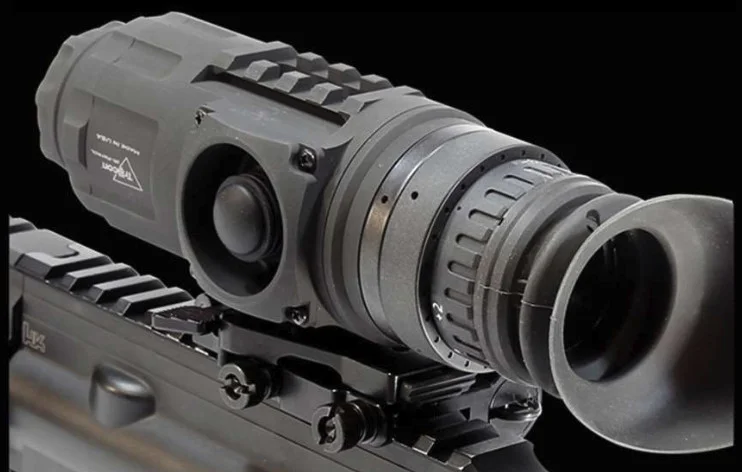
The IR-Patrol makes sense for property observation, security, and hunters who spend more time scanning than shooting. Its 1x view is fast and natural, and the 640×480 sensor produces a sharp image.
The two-hour battery is the major limitation. This optic is worth considering when surveillance is the main job. For a general-purpose hunting scope, pick one of the rifle-mounted options above.
How We Tested
Our thermal-optic evaluations include hands-on testing of more than 20 leading models, focused on what matters behind the glass at night: image clarity, controls, zeroing, battery life, magnification, and target identification. We also track the market closely as manufacturers release new generations and retire older models, keeping this list current and useful.
When comparing any thermal, we pay particular attention to:
- Image clarity: Can you distinguish an animal from brush, grass, or background heat?
- Identification range: How far out can you tell what the target is, rather than merely notice a heat source?
- Magnification: Does the zoom help, or does digital magnification just enlarge a blurry image?
- Zeroing: Can the optic be sighted in without an unnecessarily complicated process?
- Battery life: Will it last through a hunt, and can you carry practical spares?
- Weight: Does the optic make sense on the rifle you intend to carry?
- Controls: Can you run the important functions in darkness, with gloves?
- Use case: Is it meant for a rifle, handheld scanning, clip-on use, or surveillance?
We also weigh the difference between a manufacturer’s stated detection range and practical hunting performance. A target that shows up as one warm pixel at 2,000 yards is not the same as an animal you can confidently identify and ethically engage.
Why Trust Gun Made
Gun Made is an online gun search engine that compares firearm and gear prices across more than 4,000 gun stores: local shops, big-box retailers, and online dealers alike. We also publish hands-on buying guides and reviews to help you make sense of the options before you shop.
Our recommendations are editorial. A product’s presence in a retailer comparison block doesn’t determine its ranking, and we don’t take a low price as proof an optic is a good value. For this roundup, we kept first-hand observations from our earlier testing and checked every pick against our own live catalog for current pricing and in-stock retailer counts, not just competitor-quoted figures.
Josh Winsett has tested most of these thermal scopes, and our team has used them. Pulsar sent us the XL60 for review. Our ranking is our own.
Prices and inventory change. Confirm the current model, configuration, price, warranty, and your local hunting rules before you buy.
Types of Thermal Scopes
There are three main types of thermal optics: rifle-mounted scopes, handheld thermal viewers, and clip-on thermals.
Rifle-Mounted Thermal Scopes
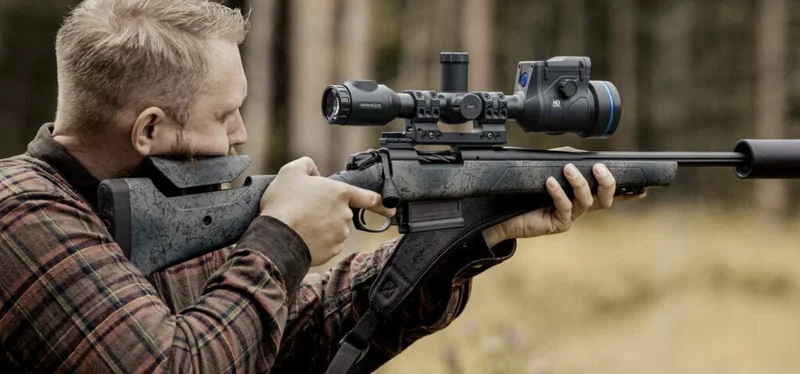
These attach directly to a rifle and include a reticle for aiming. Many also offer a laser rangefinder, ballistic calculator, video recording, or one-shot zeroing.
- Built for aimed shooting
- Usually offer the best magnification and range
- Often include advanced ballistic features
- Ready to use once mounted and zeroed
- Typically the most expensive option
- Adds weight to the rifle
- Not useful as a general-purpose handheld viewer
- Requires careful attention to mounting and zero retention
Rifle-mounted thermals are the right choice for dedicated hog, coyote, and predator hunters who need a repeatable aiming system.
Handheld Thermal Scopes

Handheld thermal viewers are designed for scanning, tracking, wildlife observation, and property management. Some can mount to a helmet or other headgear.
- Useful for observation beyond shooting
- Easy to carry between rifles or locations
- Often less expensive than a premium rifle scope
- Can help you find animals before deciding whether to take a shot
- Can’t be used as a conventional aiming optic without additional equipment
- Usually have less magnification than rifle-mounted scopes
- Battery life can be limited
- May require a separate rifle optic
A handheld thermal is a good fit when scanning is the primary task, or when you want one viewer to use across several firearms.
Clip-On Thermal Scopes
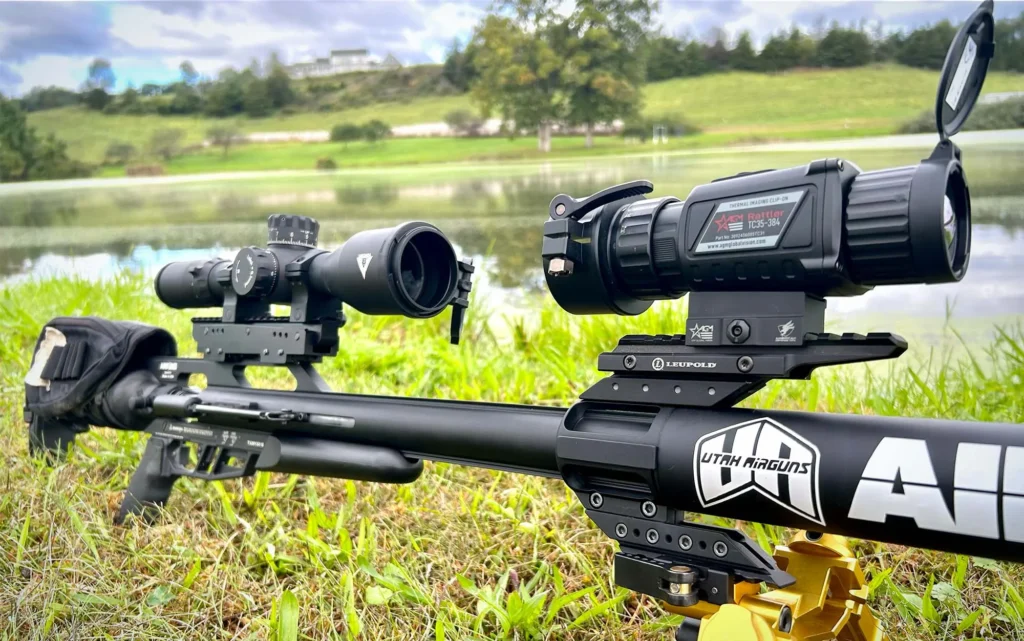
Clip-ons attach in front of a compatible daytime riflescope. They add thermal capability without replacing the daytime optic.
- Uses the daytime scope you already know
- Can be attached and removed as needed
- More flexible than a dedicated thermal rifle scope
- Useful for hunters who switch between day and night
- Requires a compatible scope and adapter
- Setup and alignment matter
- Usually costs more than a basic handheld
- May not offer independent magnification
Clip-ons are best for hunters who already own a quality daytime scope and want thermal capability without changing the rifle’s entire sighting system.
The Rise of Thermal Scopes
Thermal sights were once primarily military and law-enforcement equipment, and civilian models could cost more than $10,000. Newer products have made thermal imaging far more accessible, with useful options now spread across several price tiers.
Popular manufacturers include Pulsar, FLIR, AGM, Trijicon, ATN, Armasight, Leica, Sig Sauer, and NOCPIX. Each brand offers different combinations of sensor resolution, lens size, battery design, magnification, and software features. We’ve also gone hands-on with budget-tier options like the Goyojo GRL335 and the ATN ThOR LTV 320.
The first question is always purpose. A thermal for a lightweight AR-15 doesn’t need the same configuration as a long-range coyote scope. A handheld viewer doesn’t need a reticle at all.
Understanding Thermal Scopes
Thermal scopes detect infrared radiation from heat and convert it into an image. They don’t amplify visible light the way night-vision devices do.
Night vision amplifies available ambient light. It can produce a detailed image under moonlight or with an infrared illuminator, but it struggles in total darkness, fog, heavy brush, or smoke. If you’re weighing the two approaches, our roundup of the best night vision scopes covers that side of the decision.
Thermal imaging reads temperature differences. That lets it detect warm animals in darkness and often helps separate wildlife from the background in conditions where night vision loses contrast. One thing thermal does not do: see through walls, windows, or ordinary glass. Those materials block or reflect the infrared wavelengths the optic needs to read.
Resolution and Image Quality
Sensor resolution affects how much detail the thermal can display. A 640×480 sensor generally shows more detail than a 384×288 or 320×240 sensor, especially at distance. That doesn’t mean resolution is the only thing that matters. Lens quality, thermal sensitivity, image processing, refresh rate, and weather all affect the view.
A lower-resolution optic can still work well at closer ranges. A high-resolution optic may be wasted if your normal shots are inside 100 yards.
Detection Range and Identification Range
Detection range is the distance at which the optic can notice a heat source. Identification range is the distance at which you can tell what that heat source is.
Those are different measurements, and the gap between them matters. A manufacturer’s 2,000-yard detection claim doesn’t mean you can positively identify a coyote at 2,000 yards. Field of view, target size, weather, vegetation, humidity, and the animal’s angle all affect the practical result.
Magnification
Thermal scopes use optical magnification, digital magnification, or a combination of both.
Optical magnification changes the view through the lens and generally preserves more detail. Digital magnification enlarges the image electronically. Useful, but it can’t restore detail the sensor didn’t capture.
Higher magnification also narrows the field of view. That helps with a distant coyote but makes it harder to find a moving hog at close range.
Battery Life
Battery life is easy to overlook until you’re sitting in the dark with a dead optic. Look at the battery type, claimed runtime, charging method, and whether the optic takes replaceable cells.
Standard 18650 cells are convenient because replacements are easier to source than proprietary battery packs. Internal rechargeable batteries are tidy and simple, but carrying a power bank or waiting on a recharge can be a real inconvenience in the field.
Recoil Rating and Zero Retention
A thermal scope must be rated for the rifle and cartridge you intend to use. Confirm the manufacturer’s recoil rating rather than assuming a heavy optic is automatically durable.
Zero retention matters just as much. A scope that loses its point of impact after removal, recoil, or temperature swings will create more problems than its spec sheet suggests.
Price and Value
A thermal scope’s price typically climbs with sensor resolution, lens size, image processing, laser rangefinding, recording, and ballistic features.
The most expensive model is not automatically the best choice. A $7,000 scope may be the right tool for a hunter who regularly shoots at distance, while a $2,000 scope is the more practical call for someone hunting hogs inside 150 yards.
Buy the features that solve your problem. Don’t pay for a 3,000-yard detection claim if your normal setup rarely gives you a clear 300-yard shot.
Frequently Asked Questions
Do I need a thermal scope for night hunting?
No, but thermal is extremely useful for locating and identifying heat-producing animals in darkness. It’s particularly valuable for nocturnal hog and predator hunting.
Check your state and local regulations before hunting with thermal equipment. Rules for night hunting and the use of electronic optics vary by jurisdiction and species.
What is the best thermal scope for the money?
For a budget rifle-mounted optic, look closely at the NOCPIX BOLT L35R and ATN Thor 5 Smart HD. The BOLT offers a 384×288 sensor and integrated rangefinder, while the Thor 5 Smart HD delivers a broad feature set and long battery life at the cost of lower resolution.
For a more flexible optic, the DNT Hydra is compelling because it works as a scope, clip-on, or handheld viewer.
What is a good detection range for hunting?
That depends on the target, terrain, weather, and the difference between detection and identification. A scope that detects a warm body at 1,000 yards may not give you enough detail to identify a coyote at that distance.
For most hog and predator hunters, practical identification inside a few hundred yards matters more than the longest number on the box.
Can you use a thermal scope on an AR-15?
Yes. The ATN ThOR 4 384 2-8x is our pick for an AR-15 because its magnification range suits close- to mid-range work and it includes useful features like video recording and one-shot zeroing.
Weight matters on an AR-15. A large 60mm thermal may give you more range, but it can make the rifle less comfortable to carry and maneuver. For a non-thermal alternative on the same platform, see our picks for the best night vision scopes for AR-15s.
Do thermal scopes work during the day?
Yes. Thermal optics work in daylight, although warm conditions can reduce contrast between the target and its surroundings. Follow the manufacturer’s instructions for safe daytime use and avoid exposing the equipment to conditions outside its operating limits.
Can a thermal scope see through walls or glass?
No. Thermal scopes can’t see through walls, and ordinary glass blocks the infrared wavelengths they need to form an image. A warm object behind a barrier may heat the surface or create a distorted signature, but that’s not the same as seeing through it.
What is the difference between a 320 and 640 thermal sensor?
A 640×480 sensor displays substantially more detail than a 320×240 sensor. That advantage shows up most at longer distances, or when you need to distinguish an animal from vegetation.
A 320×240 optic can still be useful for close-range hunting, scanning, and budget-conscious buyers. Match the sensor to your normal distance instead of buying the biggest number automatically.
How to Zero a Thermal Scope
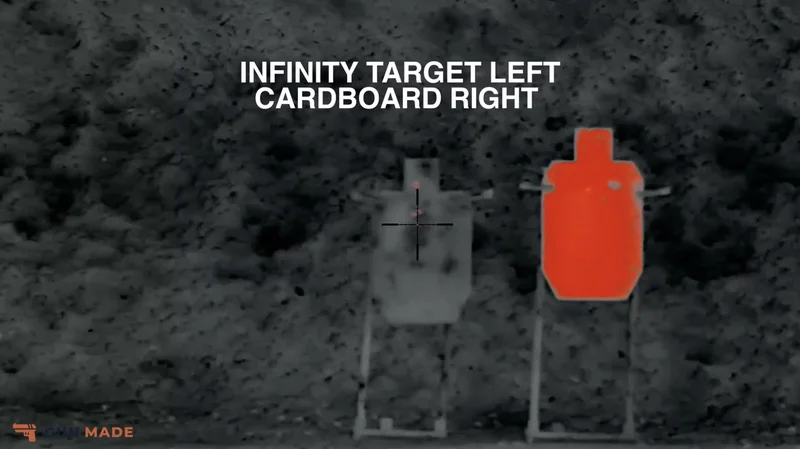
Zeroing a thermal scope is similar to zeroing a traditional rifle scope, but you need a target that creates visible heat contrast. You can buy thermal-specific targets or make one by placing a heat source behind a suitable target surface.
Always follow the scope manufacturer’s manual. Menus and one-shot-zero procedures differ between models.
- Start at a closer distance than you would for a final conventional-scope zero.
- Fire at the center of a thermal target from a stable rest.
- Confirm the point of impact is visible on the thermal display.
- Keep the rifle still and adjust the reticle to the point of impact.
- Save the reticle position or profile.
- Fire another group to confirm the adjustment.
- Repeat at longer distances, in 50-yard increments, until you reach the range you intend to use.
- Confirm the zero again after removing and reinstalling the optic or changing ammunition.
- Save separate profiles when the optic supports different rifles, loads, or distances.
When we zeroed the XL60, Josh noted that rubber-style targets held the heat from bullet strikes longer than paper or cardboard, so we had more time to finish the zero. We also learned to rest the rifle solidly because small movement while adjusting the reticle on the X and Y axis shifted the zero.
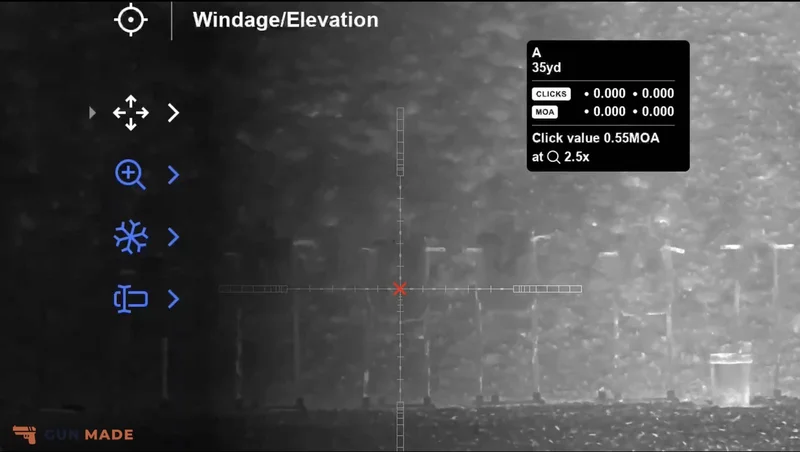
A one-shot-zero feature speeds the process up, but it doesn’t remove the need to verify your zero. If the scope won’t hold zero or the menu behaves unexpectedly, stop and consult the manual or manufacturer before trusting it in the field.
Conclusion
After our time with it on the range, the Pulsar Thermion 2 LRF XL60 is the best thermal we have shot and our best overall pick. It is expensive and heavy, so it is not for everyone.
For a premium alternative, the AGM Adder V2 LRF 60-1280 offers impressive range and a high-resolution display. The DNT Hydra is the most versatile value pick, while the NOCPIX BOLT L35R is our budget choice. AR-15 owners should start with the ATN ThOR 4 384 2-8x, and readers who already own a daytime scope should consider the LEICA Calonox clip-on.
Thermal optics are not interchangeable. Choose based on your normal shooting distance, rifle weight, battery plan, mounting system, and local hunting rules. Then verify the current model and listing before you order.
If you can, shoulder the optic before buying. Two minutes of handling tells you more about weight, controls, and eye position than an hour of spec sheets.
Stay safe and aim true!